
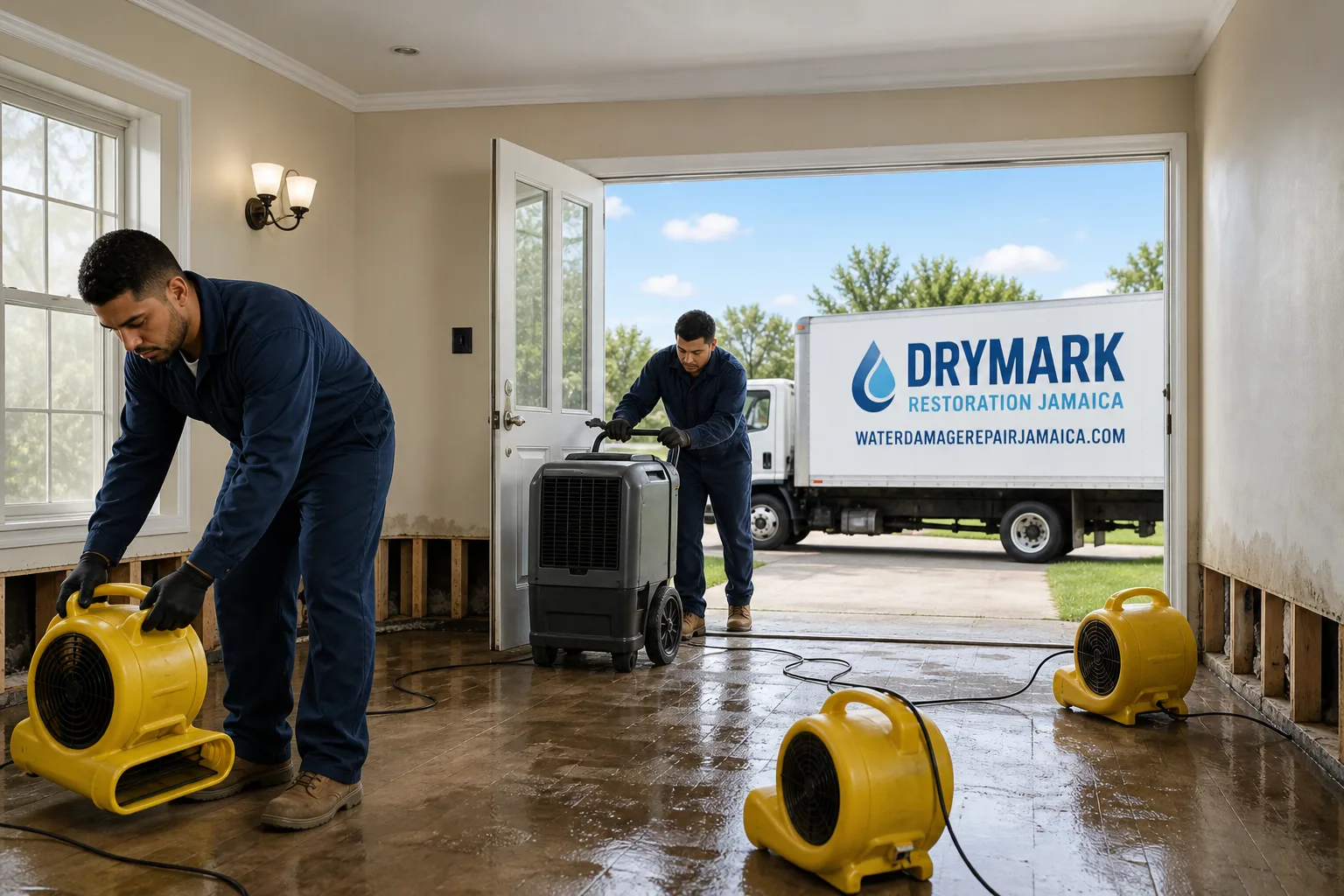
Free visual inspection and a written scope of work before any mitigation begins - photos, moisture readings, and drying logs go in your claim file
The scope we write is the scope we bill. Anything new gets shown to you, in writing, before we touch it.
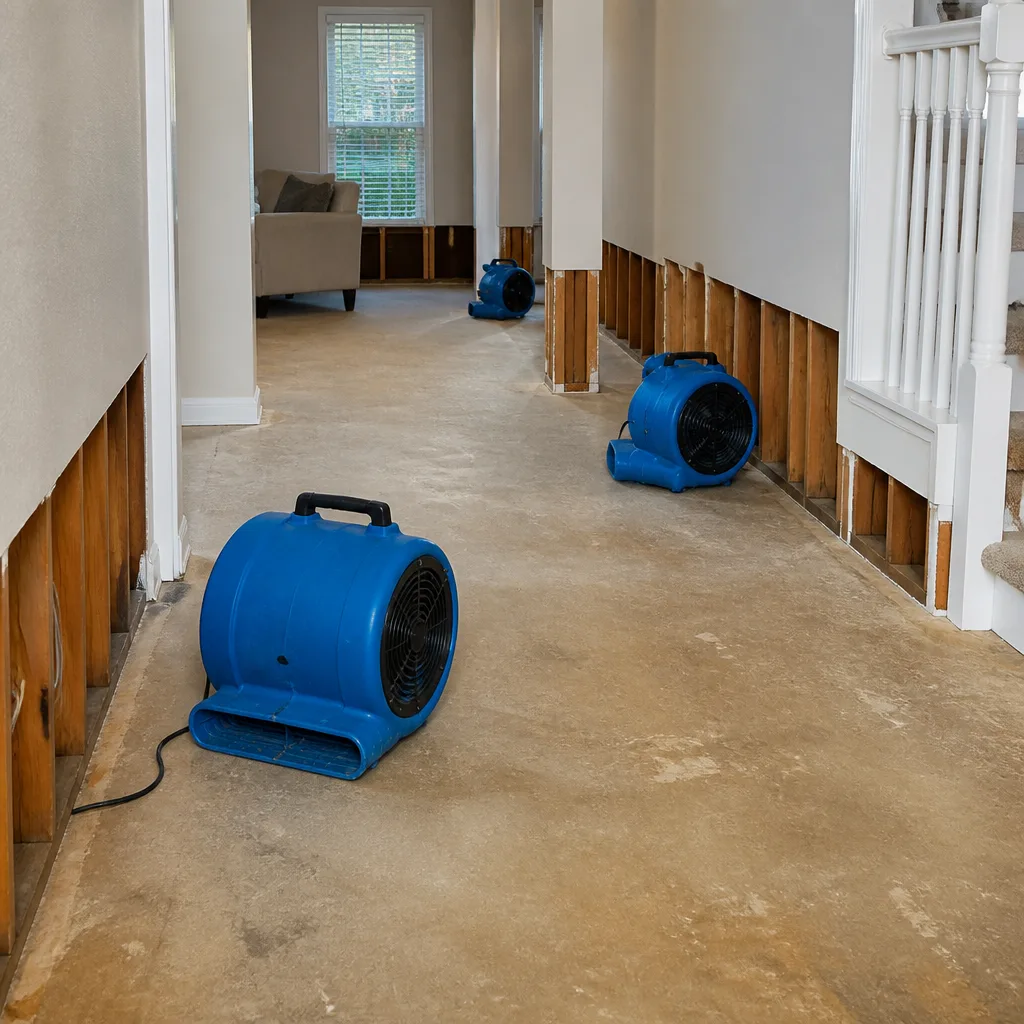
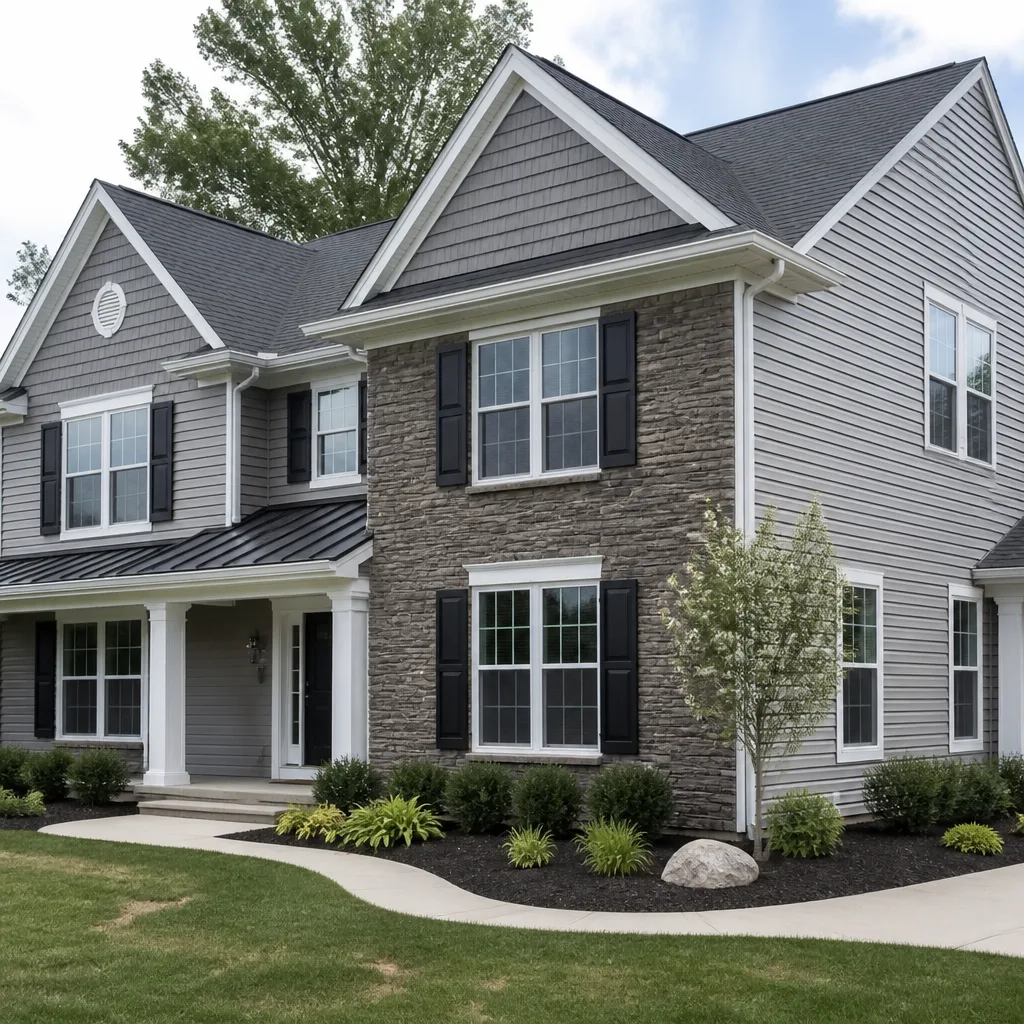
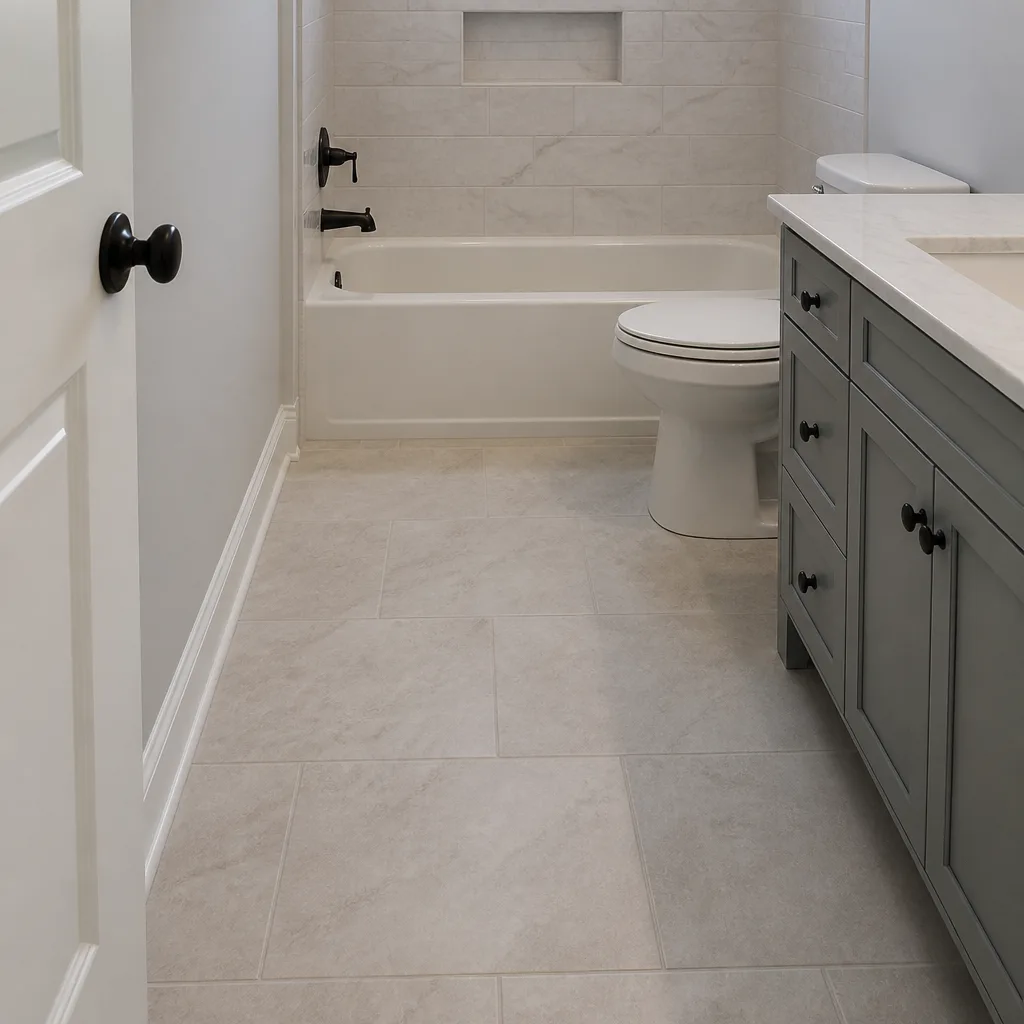
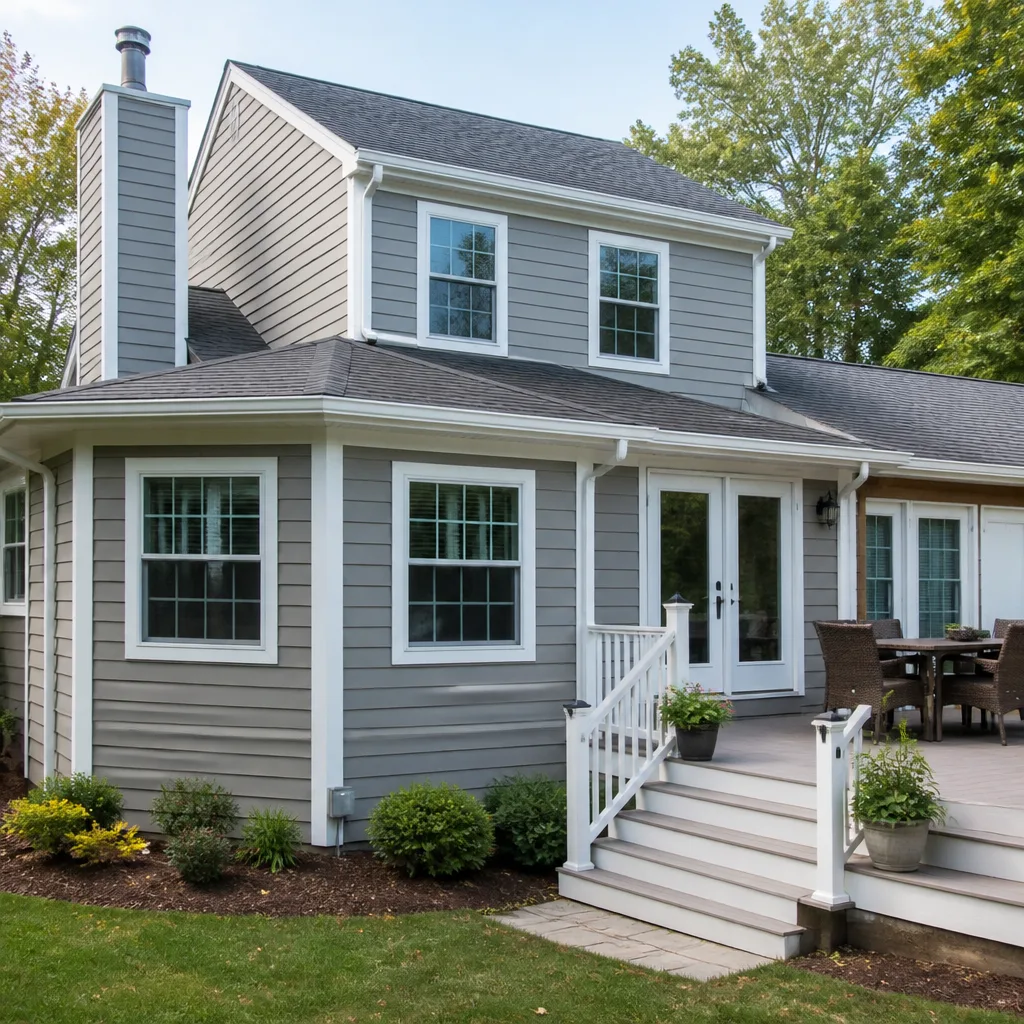
 Before
 After
After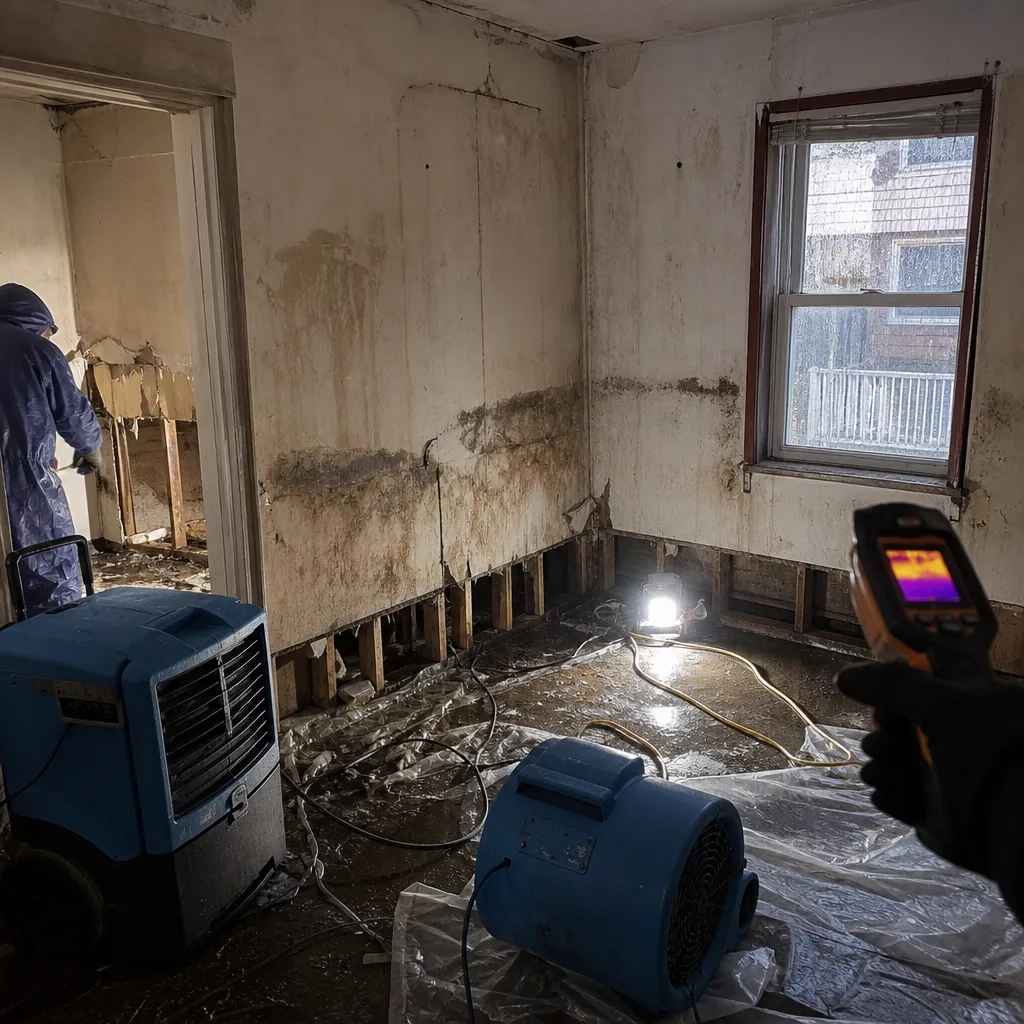 Before
 After
After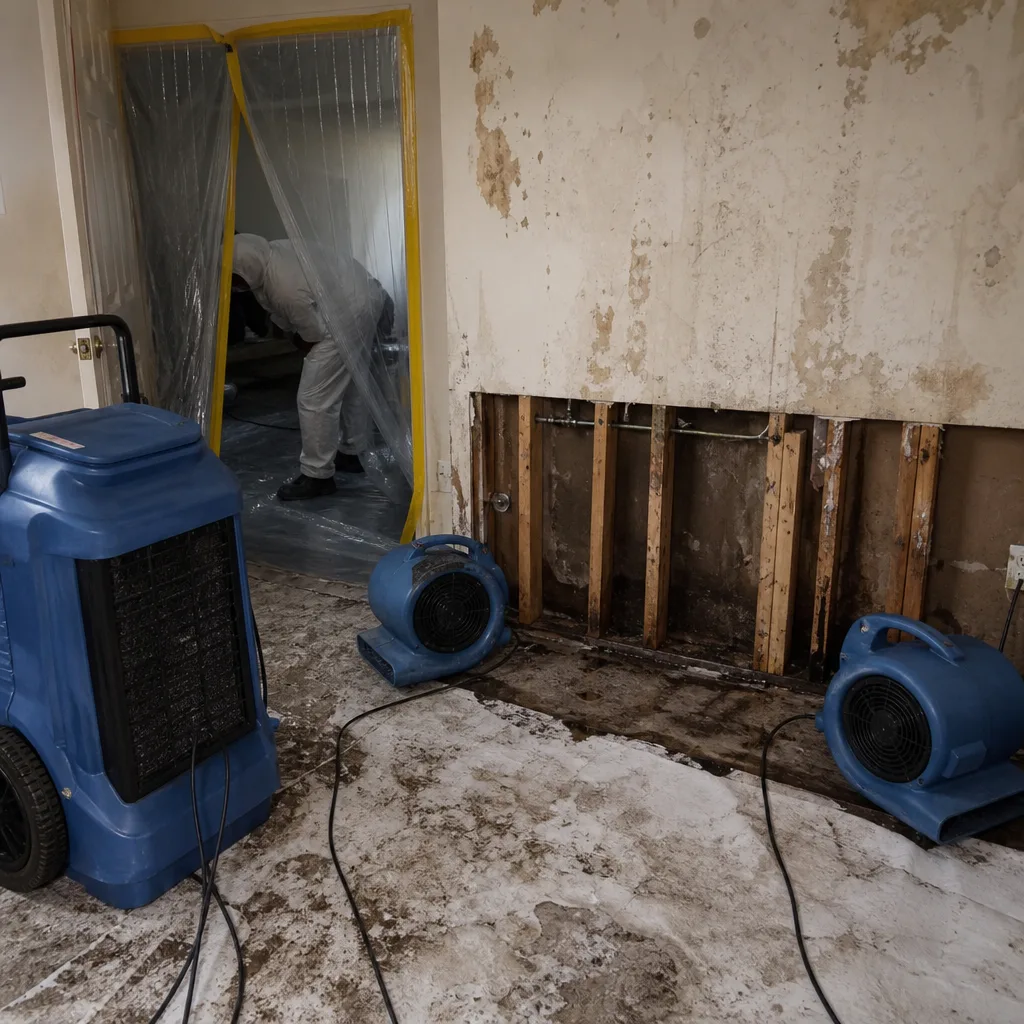 Before
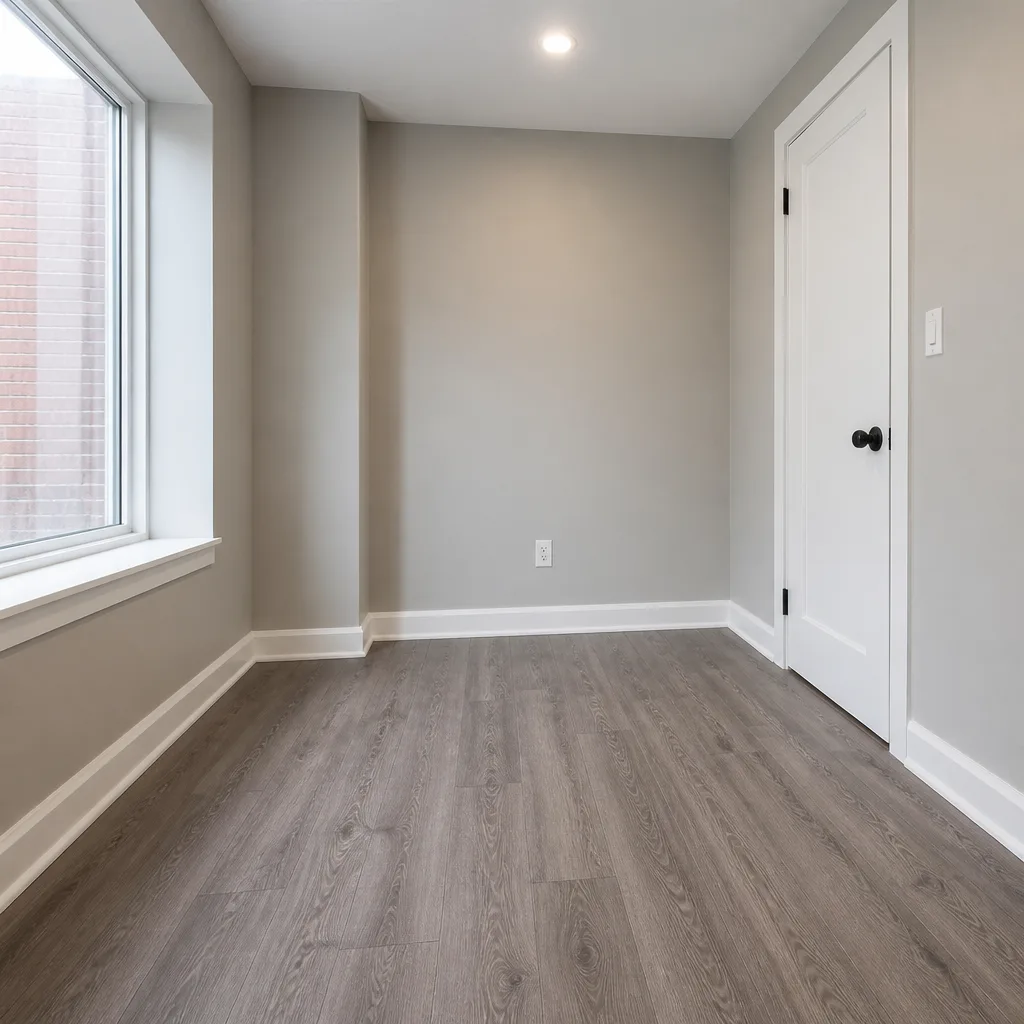 After
AfterFast, Reliable Mold Remediation Across East New York
Mold remediation in East New York typically costs $1,800-$4,500 for an average residential job, with full containment and air-quality restoration running higher in multi-family units or Sandy-affected properties with salt-contaminated subfloors. Most East New York homeowners receive a written price within 24 hours of our first visit, and emergency assessments start the same day you call. If you’re seeing dark patches, smelling mustiness, or dealing with recurring dampness in a basement or crawl space, call (516) 240-9735 - our Mold Remediation team dispatches from our New York City office and serves East New York directly.
We’ve worked the full stretch of East New York, from the Spring Creek corridor down to the Jamaica Bay edge, through the NYCHA campuses at Pink Houses and Linden Houses, and up toward the Broadway Junction transit hub. The housing here tells two stories: pre-war brick row houses built between the 1910s and 1940s, and post-1980s construction thrown up after the arson crisis. Both have their own paths to mold, and neither responds well to a generic treatment plan.
Why DryMark Restoration Jamaica Is East New York’s Preferred Mold Remediation Company
Back to Dry Restoration, led by Alicia Brennan, has handled mold jobs in East New York since we began documenting every job to IICRC and RIA standards in 2011. Our reputation here was built on jobs where other contractors missed the real problem - salt-crystal deposits from Hurricane Sandy wicking moisture into framing years after the flood, or chronic groundwater intrusion in Spring Creek basements that a surface dry-out never touches.
Our East New York customers leave reviews mentioning the same things: the photo record we deliver after every visit, the written price before anyone starts work, and the moisture readings that prove the job is actually done. We’re not the fastest to make promises. We’re the ones who show you the documentation.
Response time to East New York runs same-day for emergency assessments, with our crews coordinating dispatch from the New York City office. For non-emergency mold inspections, we typically schedule within 24-48 hours.
What separates our work in East New York is local failure-mode knowledge. We know that a musty smell in a Fountain Avenue basement often means probing for Sandy-era salt contamination, not just running a dehumidifier. We know that NYCHA compliance protocols require specific documentation for mold remediation at Pink Houses, Boulevard Houses, and Linden Houses. And we know that flat-roofed row houses with failed parapet flashings will keep delivering water to the same wall cavities until someone maps the vapor pressure differential and fixes the source.
Our Mold Remediation Services in East New York
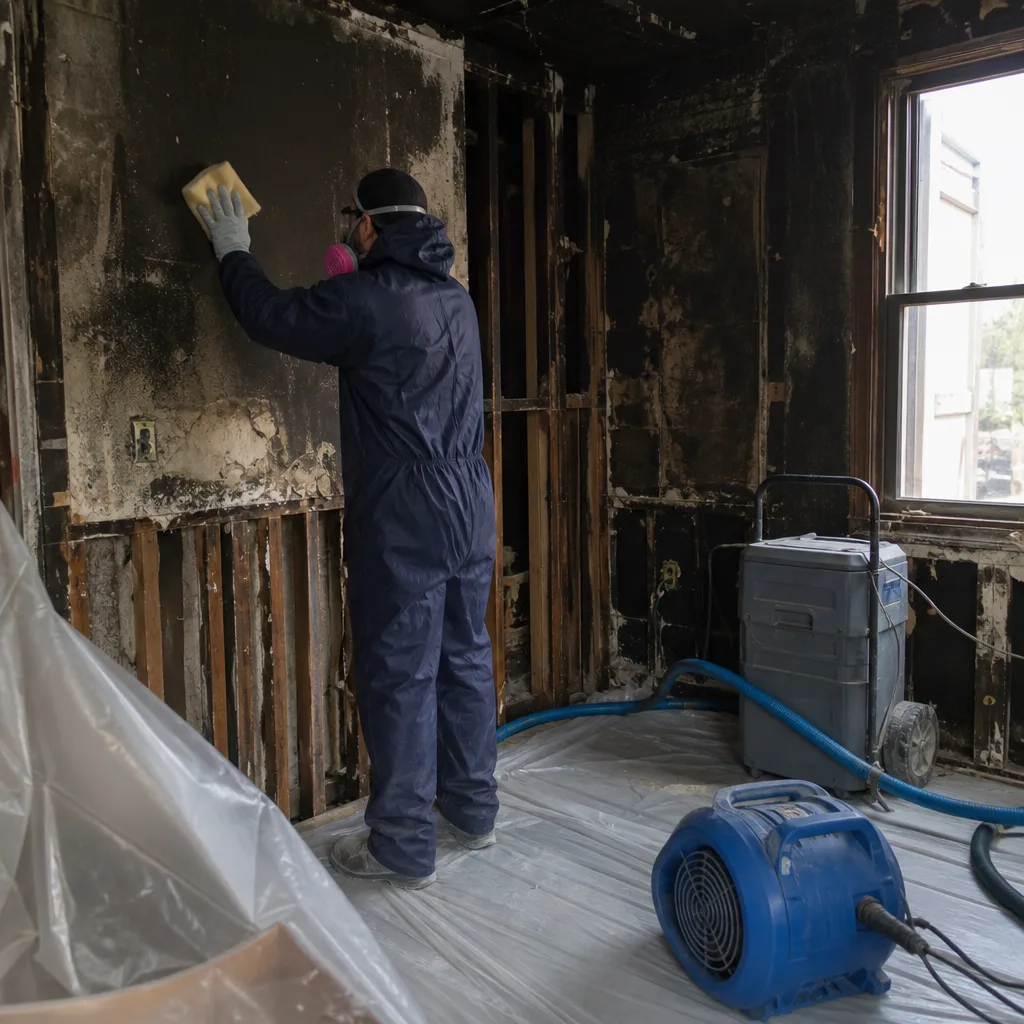
Mold Inspection & Testing
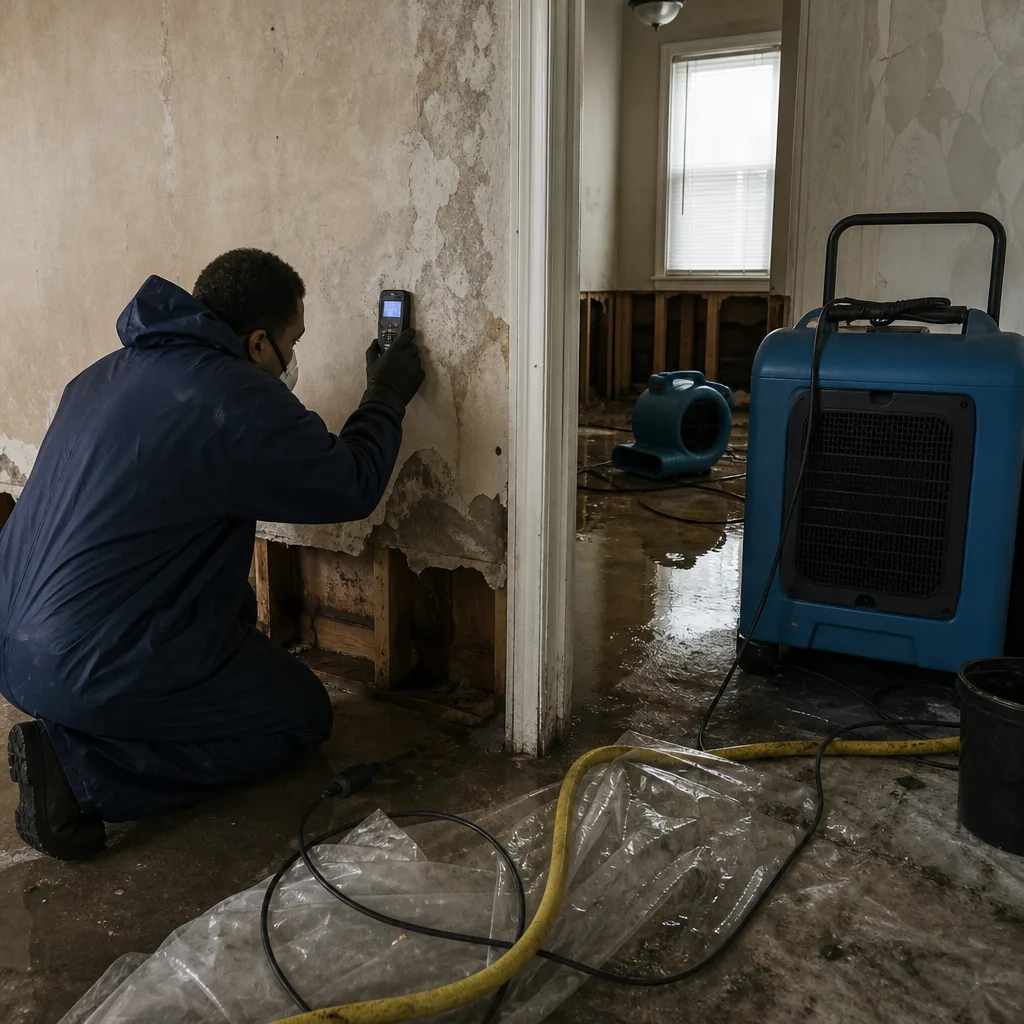
Every East New York mold job starts with inspection and testing that goes deeper than visual scanning. In pre-war row houses near Atlantic Avenue or along Pennsylvania Avenue, we use moisture meters, thermal imaging, and air sampling to locate hidden colonies behind plaster and within subfloor cavities. In the Spring Creek corridor, we specifically probe for salt-crystal residue from Sandy’s surge - a signature contaminant in this neighborhood that freshwater flood zones don’t produce. Our inspection report includes documented photos, moisture readings by room, and a written scope with a fixed price before any remediation begins. Haven Standard, Clause 1.
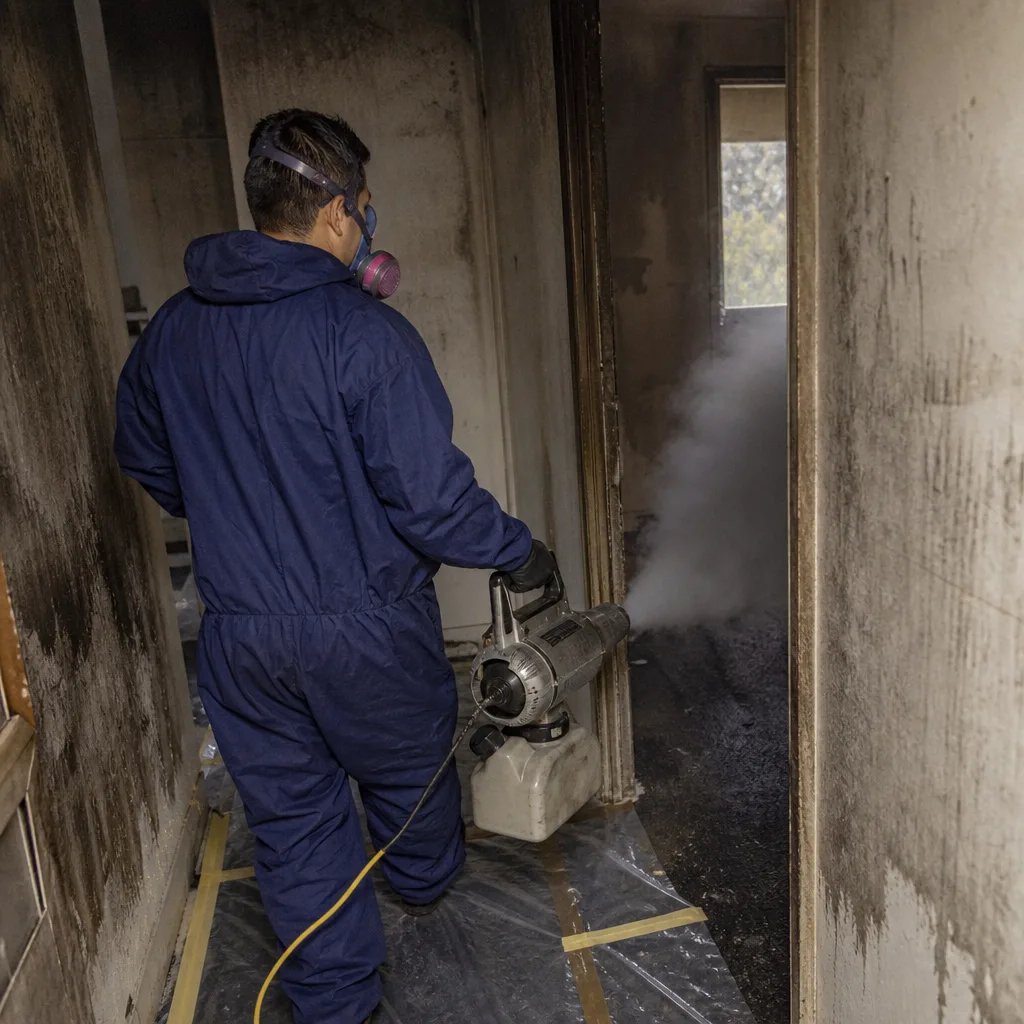
Mold Removal
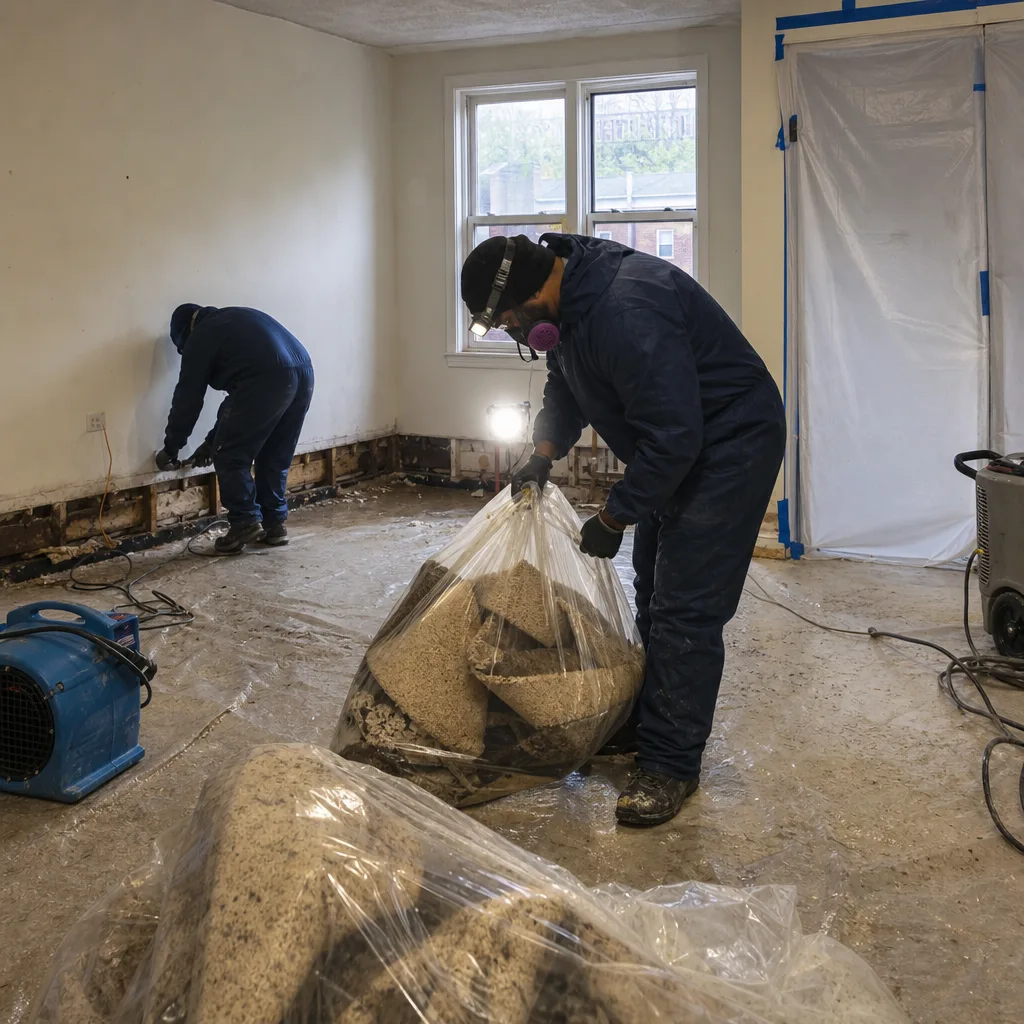
Removal in East New York means containment first, then source elimination. We seal affected areas with polyethylene barriers and negative-air machines before disturbing any colony, preventing cross-contamination to occupied spaces. For multi-family row houses - common from New Lots to Cypress Hills - this step is critical because shared walls and HVAC runs can carry spores between units. Our crews remove contaminated drywall, insulation, and framing members, then HEPA-vacuum and treat remaining substrates with antimicrobial agents. All debris is bagged, sealed, and disposed of per New York City Department of Sanitation requirements.
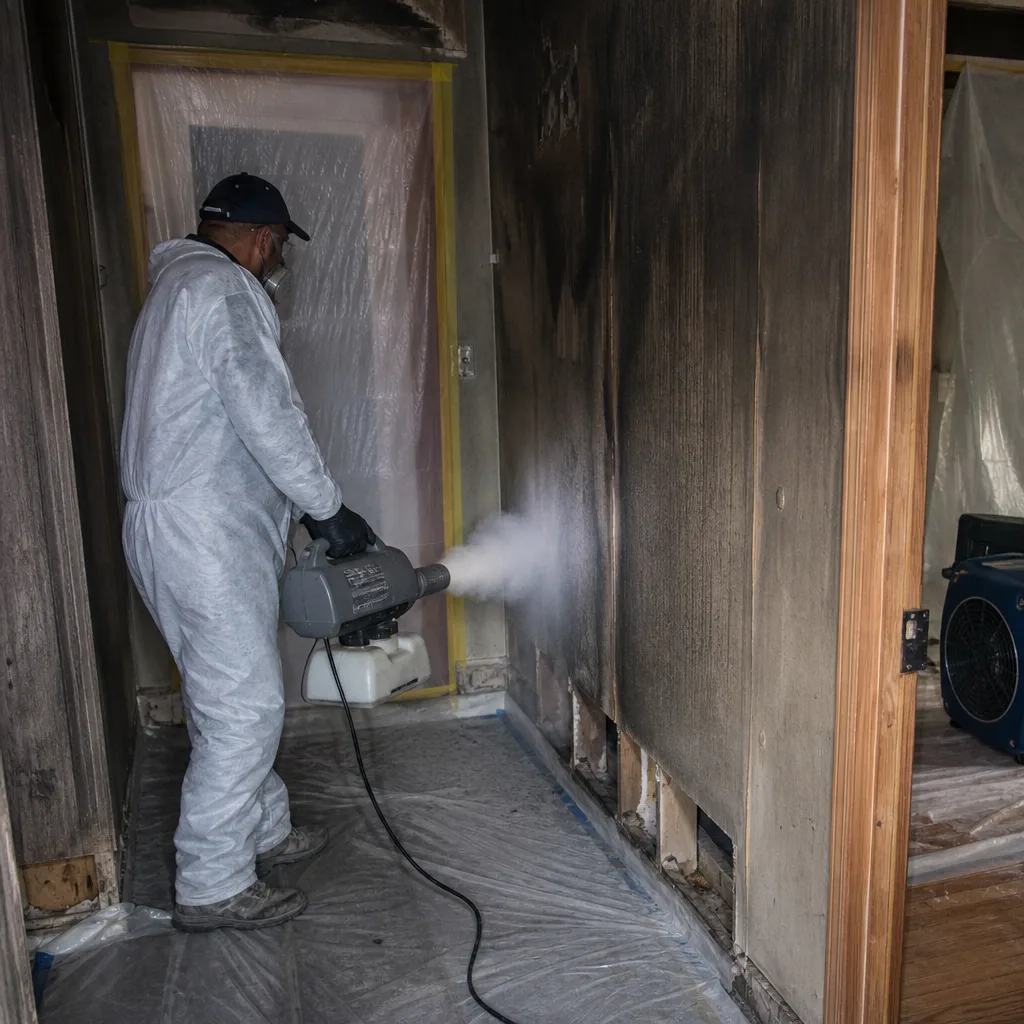
Black Mold Remediation
Stachybotrys and other toxigenic molds require enhanced containment and personal protective protocols. In East New York, we most often encounter heavy black mold in basements with chronic groundwater intrusion - particularly in the Spring Creek and Fountain Avenue corridor where high water tables keep slabs damp year-round - and in wall cavities where roof leaks at flat-roof parapets have gone unaddressed. Our black mold protocol includes full-face respirators, Tyvek suits, double-layer containment, and air scrubbers running 24/7 during active work. Post-remediation clearance testing verifies spore counts have dropped to acceptable levels before we release containment.
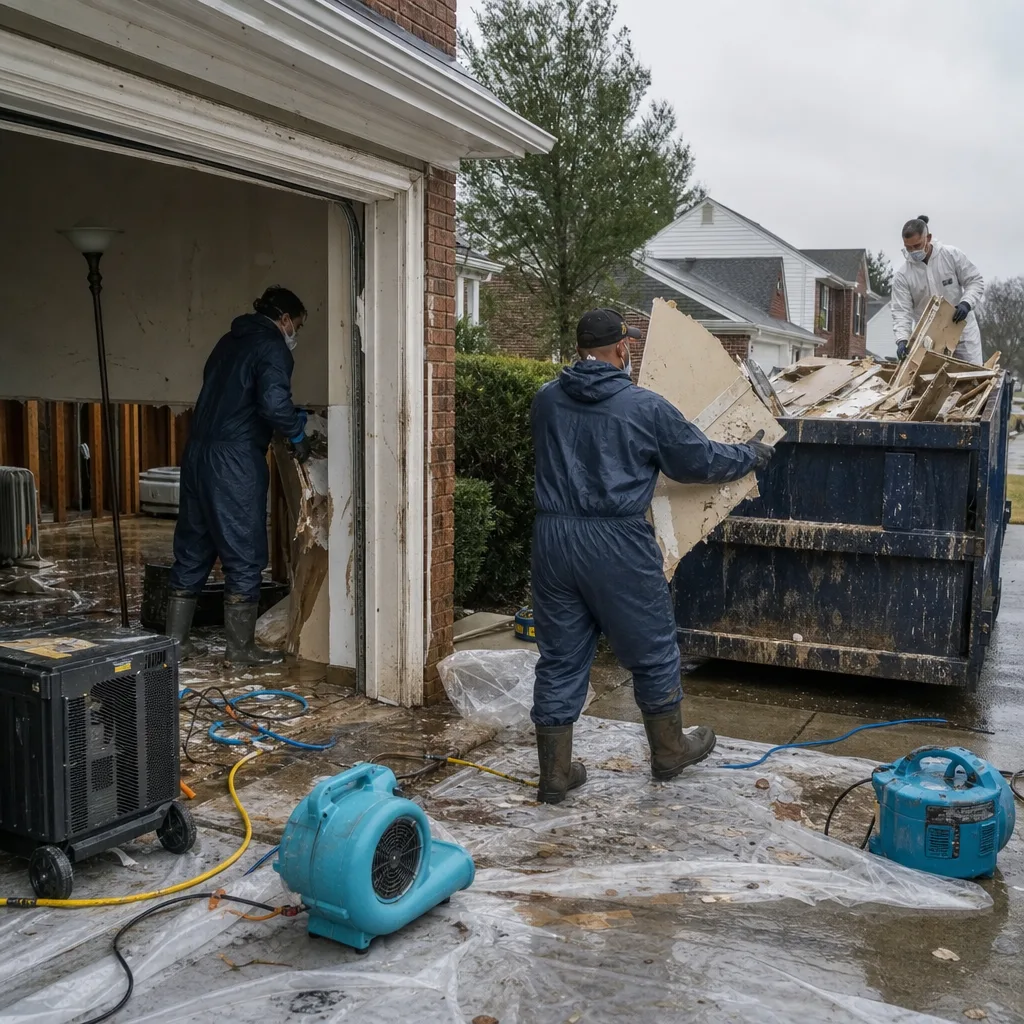
Air Quality Restoration
After physical removal, we restore breathable air using HEPA filtration, activated carbon scrubbing, and controlled ventilation. In East New York’s tighter post-1980s construction, we pay special attention to HVAC ductwork that may have distributed spores before the problem was identified. Our air quality restoration includes pre- and post-treatment sampling with lab analysis, documented to IICRC standards. For asthma-sensitive households - common in East New York’s younger family demographics - we verify particulate and VOC levels independently before sign-off.
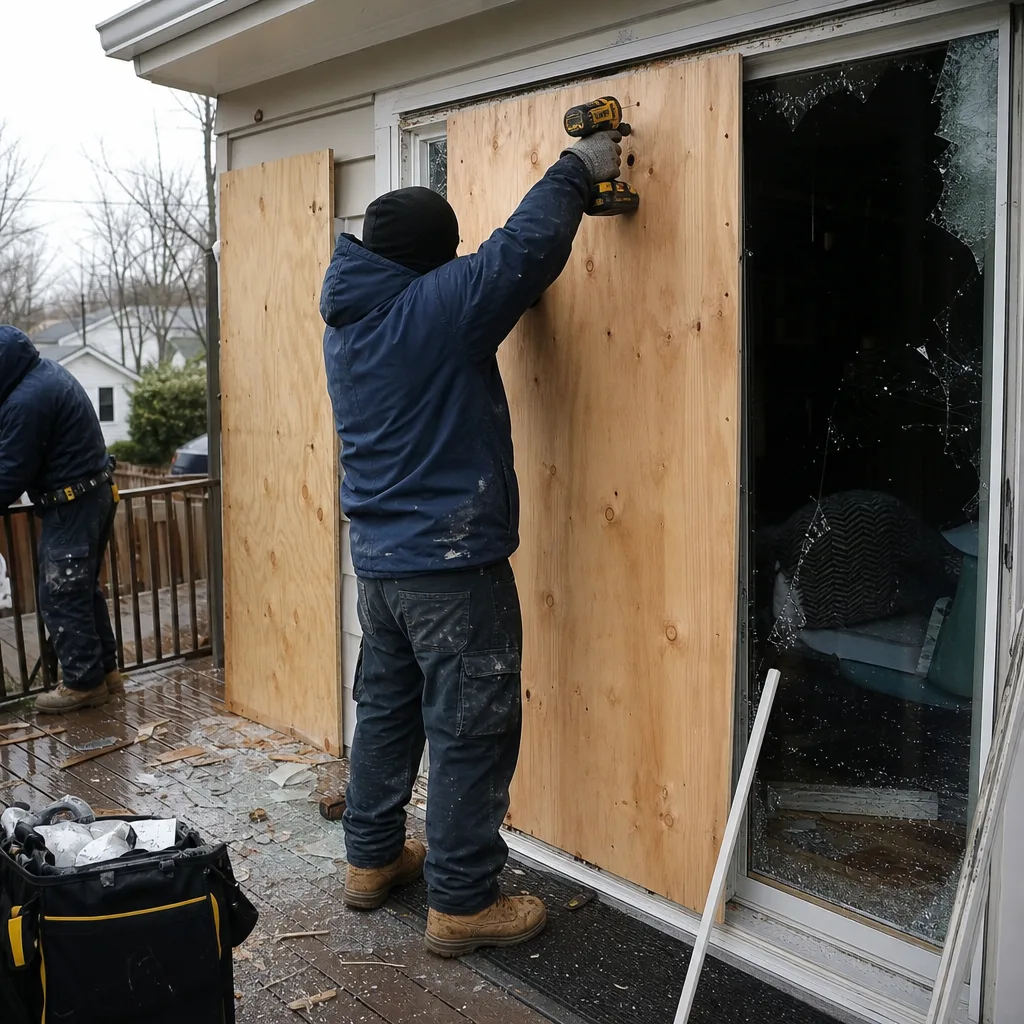
Crawl Space Treatment
East New York has more crawl spaces than most Brooklyn neighborhoods realize, especially in the low-lying Spring Creek area where builders avoided full basements due to groundwater. These spaces suffer from vapor intrusion through dirt floors, foundation cracks from freeze-thaw cycling, and poor ventilation. Our crawl space treatment includes vapor barrier installation, dehumidification with XPOWER and Dri-Eaz equipment, structural drying with documented moisture logs, and mold treatment on joists and subflooring. Without this work, first-floor rooms above stay musty no matter how many air purifiers you run.
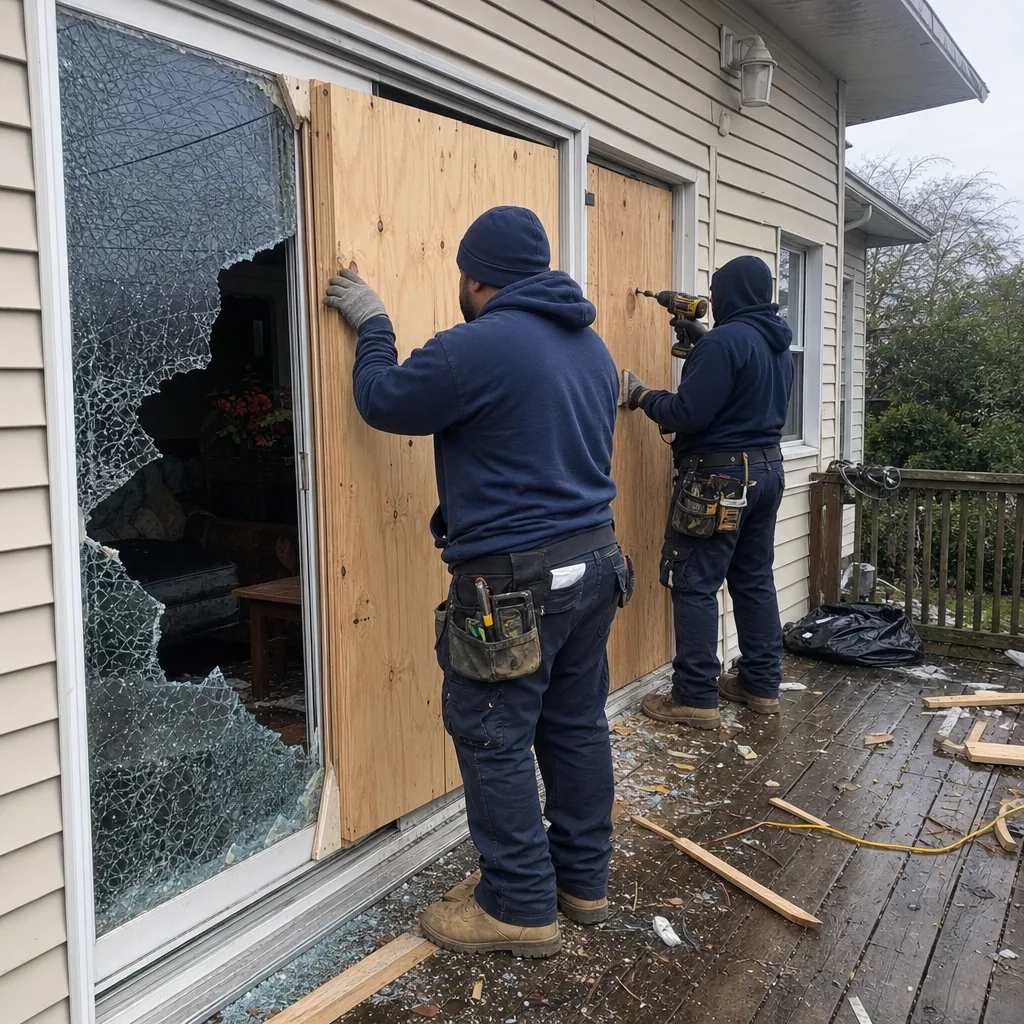
Moisture & Humidity Control
Controlling moisture in East New York means fighting geography as much as weather. The Spring Creek corridor’s high groundwater table keeps relative humidity elevated in basements and crawl spaces even during dry spells. We install permanent dehumidification systems, seal foundation cracks with hydrostatic-pressure-rated compounds, and improve drainage grading where possible. Every humidity control plan includes a written scope, equipment specifications, and target psychrometric numbers - the measurable relationship between temperature and moisture in air that tells us when a space is truly dry, not just feels dry.
What happens when you call
- 1
A real person answersNo phone trees - you reach a local pro.
- 2
You get an upfront price rangeHonest numbers before anyone is dispatched.
- 3
A background-checked tech heads outLicensed & insured, dispatched right away.
- 4
You approve before work beginsNothing starts until you say go.
BeforeAfterTrusted Brands We Service in East New York
Our East New York crews deploy professional-grade drying and remediation equipment from Dri-Eaz, Phoenix, and XPOWER - brands specified in IICRC restoration protocols and recognized by insurance adjusters nationwide. We stock HEPA air scrubbers, low-grain refrigerant dehumidifiers, and specialized Injectidry cavity-drying systems locally, which means faster setup on East New York jobs and no waiting for rental equipment from outside the borough. For NYCHA-regulated work at Pink Houses, Boulevard Houses, and Linden Houses, our equipment documentation meets agency compliance requirements without additional processing delays.
Common Mold Remediation Problems We See in East New York Homes
- Salt-crystal contamination from Hurricane Sandy still active in subfloors. On a two-family brick row house off Fountain Avenue near the Spring Creek corridor, our crew investigated a musty odor after a winter freeze-thaw cracked the foundation. Our tech found salt-crystal residue from Sandy’s surge wicking into the subfloor, feeding active mold colonies and corroding fasteners that looked fine until probed. Using Injectidry and Dri-Eaz equipment, we completed containment, antimicrobial treatment, and structural drying, then logged moisture readings before rebuilding the compromised framing.
- Chronic basement dampness from high groundwater tables in the Spring Creek corridor. Standard dry-outs fail here because the water source is below the slab, not above it. We map vapor pressure differentials and install permanent dehumidification with documented target readings.
- Flat-roof parapet flashing failures in pre-war row houses. These send water into wall cavities repeatedly, creating mold behind intact plaster that homeowners don’t discover until the smell becomes unmistakable or a wall section softens.
- Hidden mold behind modern finishes in post-1980s construction. Vinyl siding, drywall, and synthetic insulation can trap moisture while presenting a clean surface. Without moisture mapping, these jobs get treated cosmetically while colonies grow behind the finish layer.
Pricing for Mold Remediation in East New York, NY
Mold inspection and testing in East New York runs $350-$650 for a standard residential assessment, including moisture mapping, air sampling, and a written report with photo documentation. Containment and mold removal for a contained basement or single room typically falls between $1,800 and $3,200. Full-structure remediation in multi-family row houses or properties with Sandy-era salt contamination ranges $3,500-$6,500, with complex jobs involving structural rebuilds extending higher. Crawl space treatment with vapor barrier and permanent dehumidification adds $1,200-$2,800. Air quality restoration with post-remediation clearance testing runs $800-$1,500 depending on square footage and sampling density.
What moves the number: affected square footage, accessibility of hidden cavities, presence of toxigenic species requiring enhanced PPE, structural repairs needed after removal, and NYCHA compliance documentation where applicable. Every East New York job receives a written price before work begins - Haven Standard, Clause 1 - with no scope additions once our crew is inside. We also offer a Free Second Opinion on any competitor’s written estimate. Call (516) 240-9735 for an exact quote; estimates are free.
We Also Serve Cities Near East New York
Our crews work throughout central and eastern Brooklyn and into Queens. If you’re in East New York or nearby Jamaica, Fresh Meadows, Forest Hills, or Ozone Park, the same documentation standards and written-price guarantee apply. Dispatch and scheduling are coordinated from our New York City office.
Serving East New York, NY - Our Local Coverage Area
We’re based in the East New York area and know this community well. Use the map below to see our service coverage - if you’re nearby, we can almost certainly help.
FAQs - Mold Remediation in East New York
Because the groundwater table stays high year-round and many basements were built without proper vapor barriers or drainage. Standard dry-outs remove surface moisture but don’t address vapor pressure pushing through slabs and foundation cracks. Our crews map the actual moisture source and install permanent dehumidification with documented target readings. Call (516) 240-9735 for a basement assessment - estimates are free.
Pre-war row houses have plaster-and-lath walls, cast-iron drains, and parapet flashing failures that send water into cavities; post-1980s construction uses drywall and synthetic insulation that trap moisture behind clean-looking finishes. The inspection approach differs - we probe plaster differently than drywall, and moisture mapping locations change. Both get a written scope and fixed price before work starts.
Call for inspection - musty odor without visible growth often means hidden colonies in subfloor cavities, behind drywall, or within HVAC runs. In East New York, we specifically probe for Sandy-era salt-crystal deposits that wick moisture and feed hidden mold. Our inspection includes thermal imaging, moisture meters, and air sampling with documented photos. Call (516) 240-9735 to schedule; estimates are free.
Yes. Salt-crystal deposits from Sandy’s surge remain in subfloor cavities and framing near the Jamaica Bay edge and Spring Creek corridor. Salt hygroscopically attracts moisture from humid air, keeping wood damp enough for mold colonization years after the original flood. This damage profile is largely absent in neighboring Brownsville or Bushwick, which didn’t experience the same sustained saltwater inundation. Proper remediation requires probing and treating these deposits, not just surface cleaning.
Mold can establish visible colonies within 48-72 hours of water intrusion in East New York’s humid summer conditions, faster in poorly ventilated basements and crawl spaces. Call immediately if you have active water intrusion, and within 24 hours if you discover past leakage with any musty smell or discoloration. Delay increases remediation cost and structural damage. For active leaks, we coordinate with plumbers and document for insurance; call (516) 240-9735.
Written by Alicia Brennan, Owner at Back to Dry Restoration, serving East New York since 2011.