
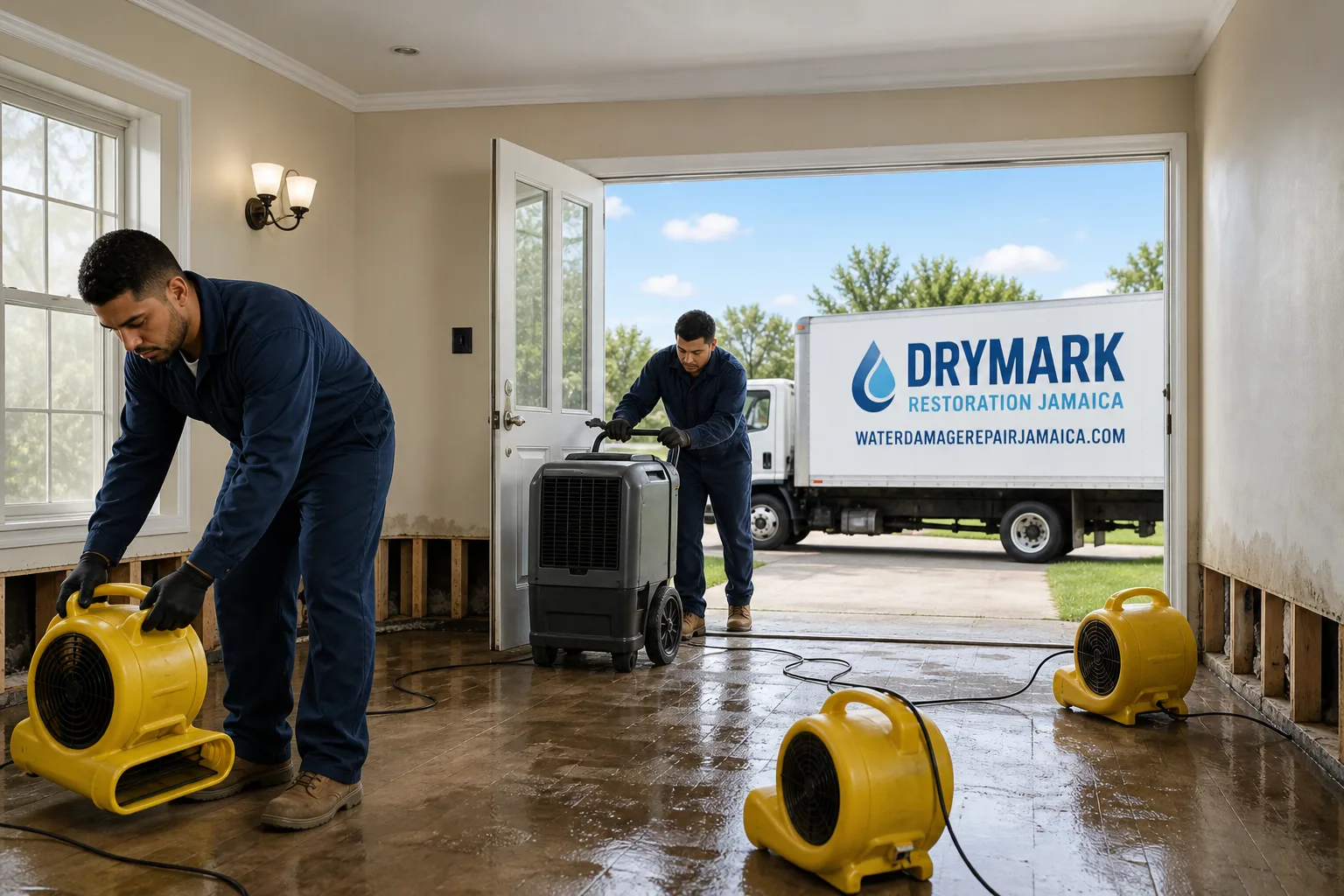
Free visual inspection and a written scope of work before any mitigation begins - photos, moisture readings, and drying logs go in your claim file
The scope we write is the scope we bill. Anything new gets shown to you, in writing, before we touch it.
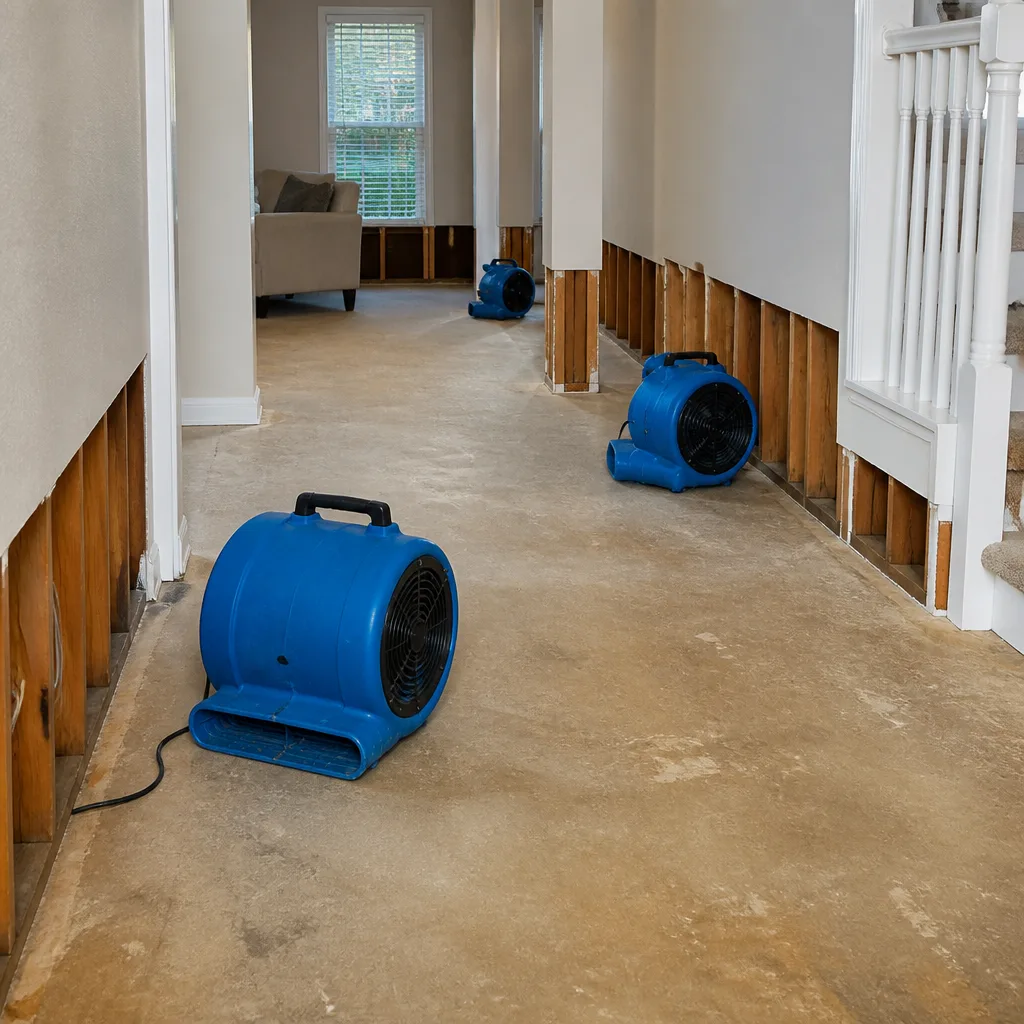
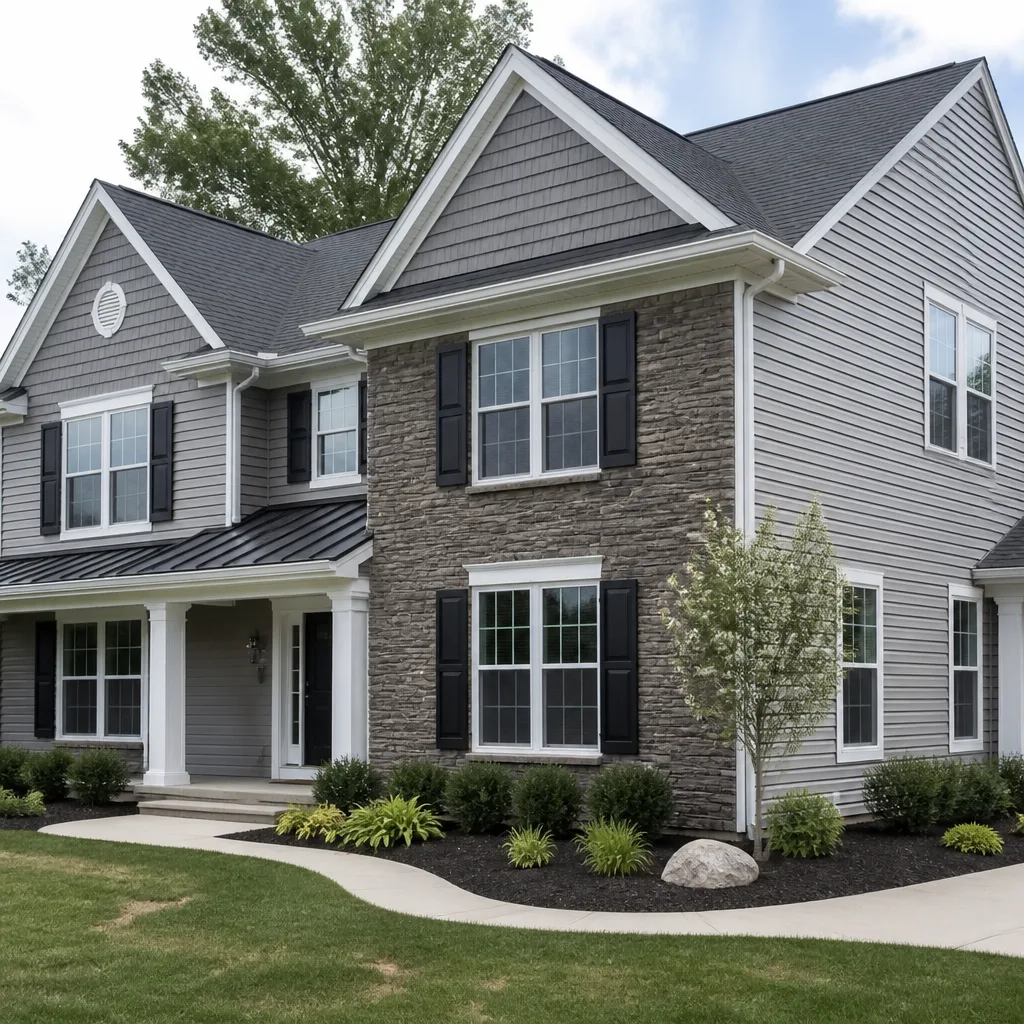
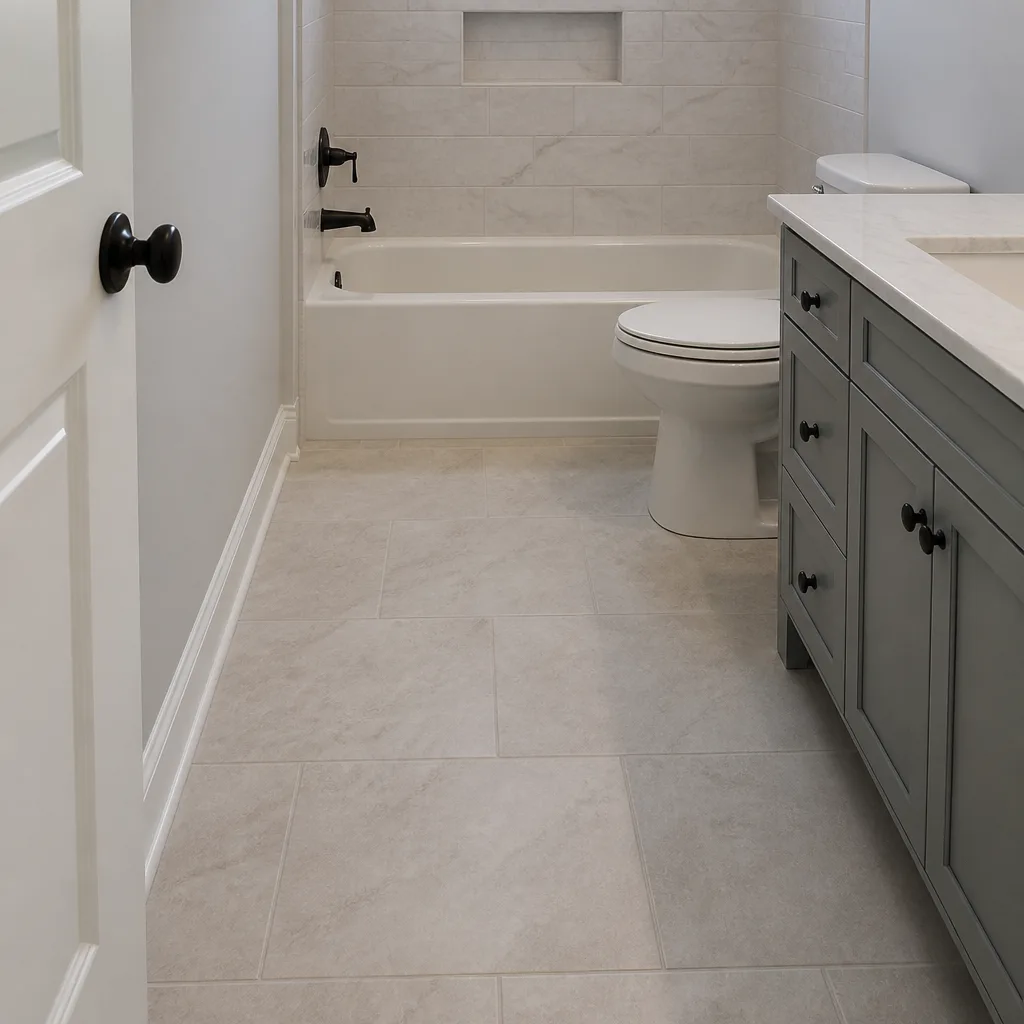
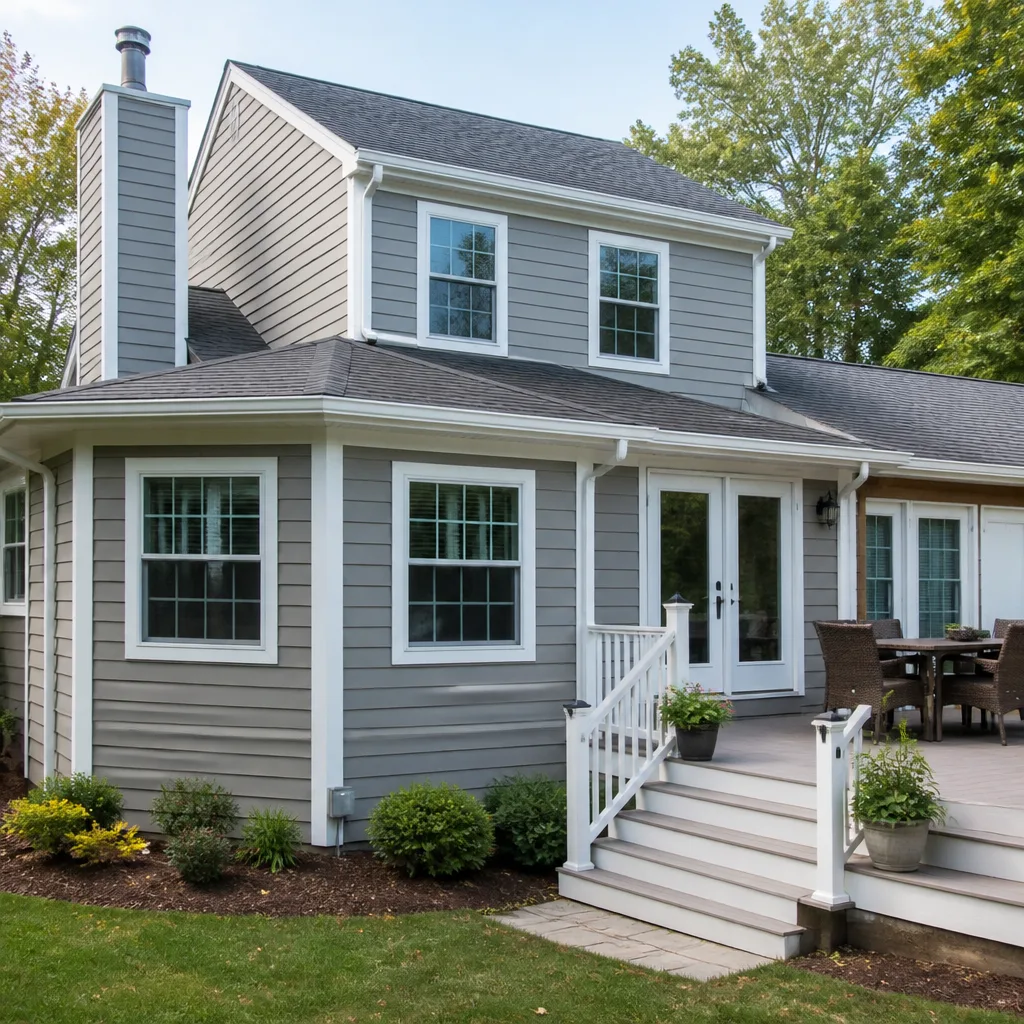
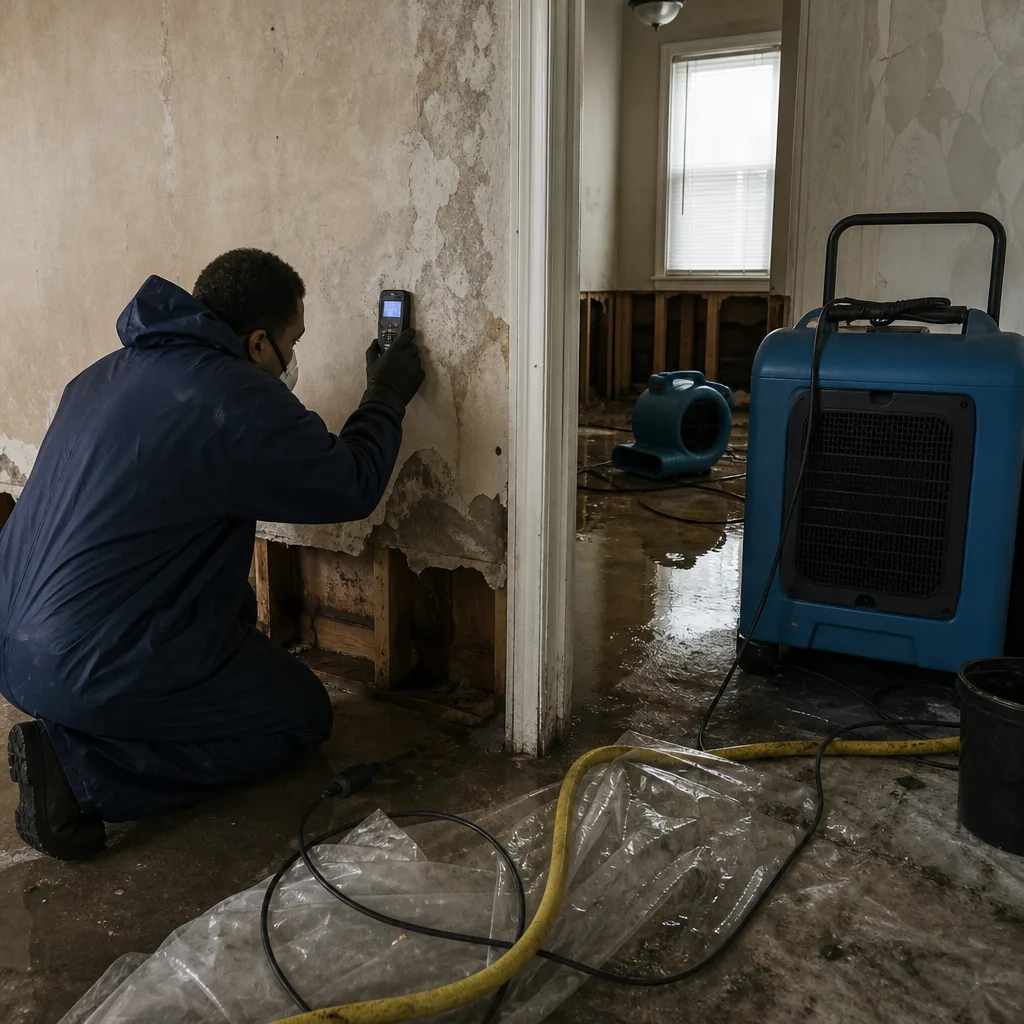 Before
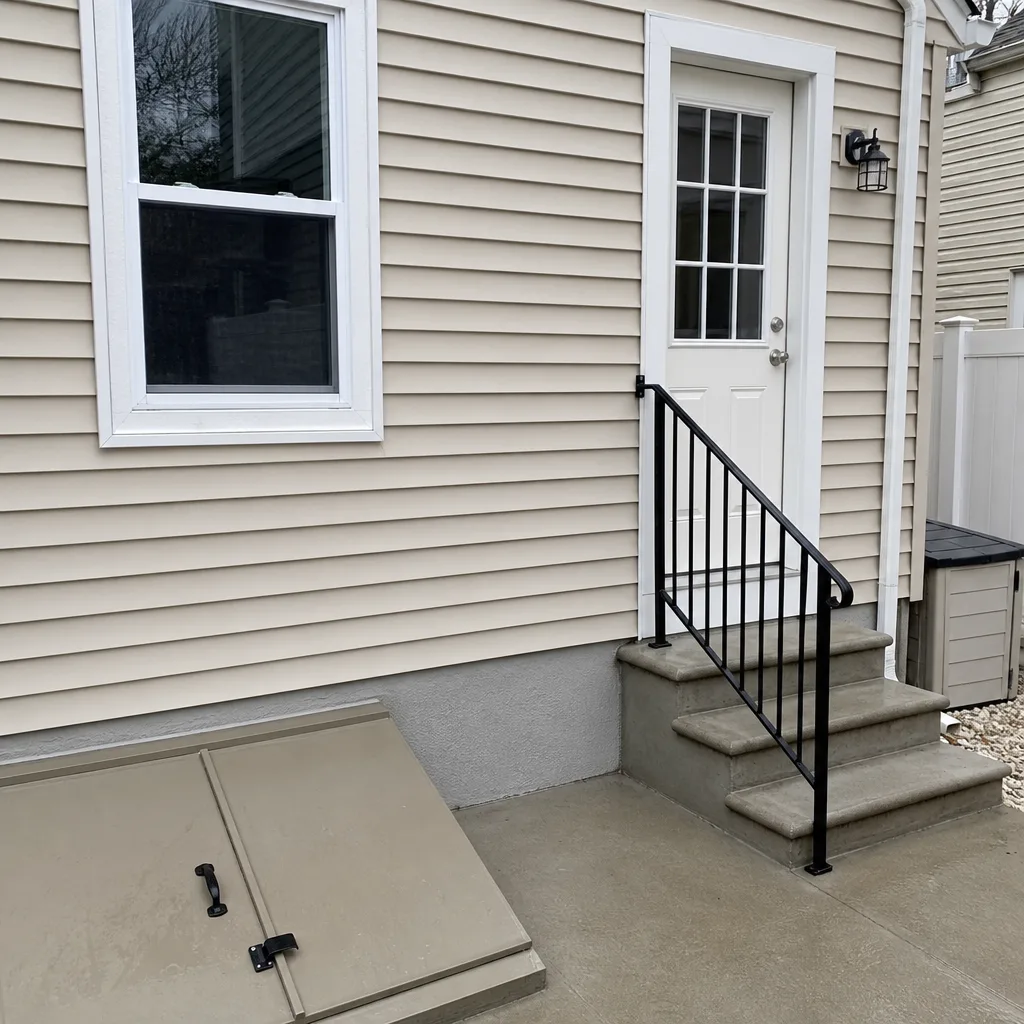 After
After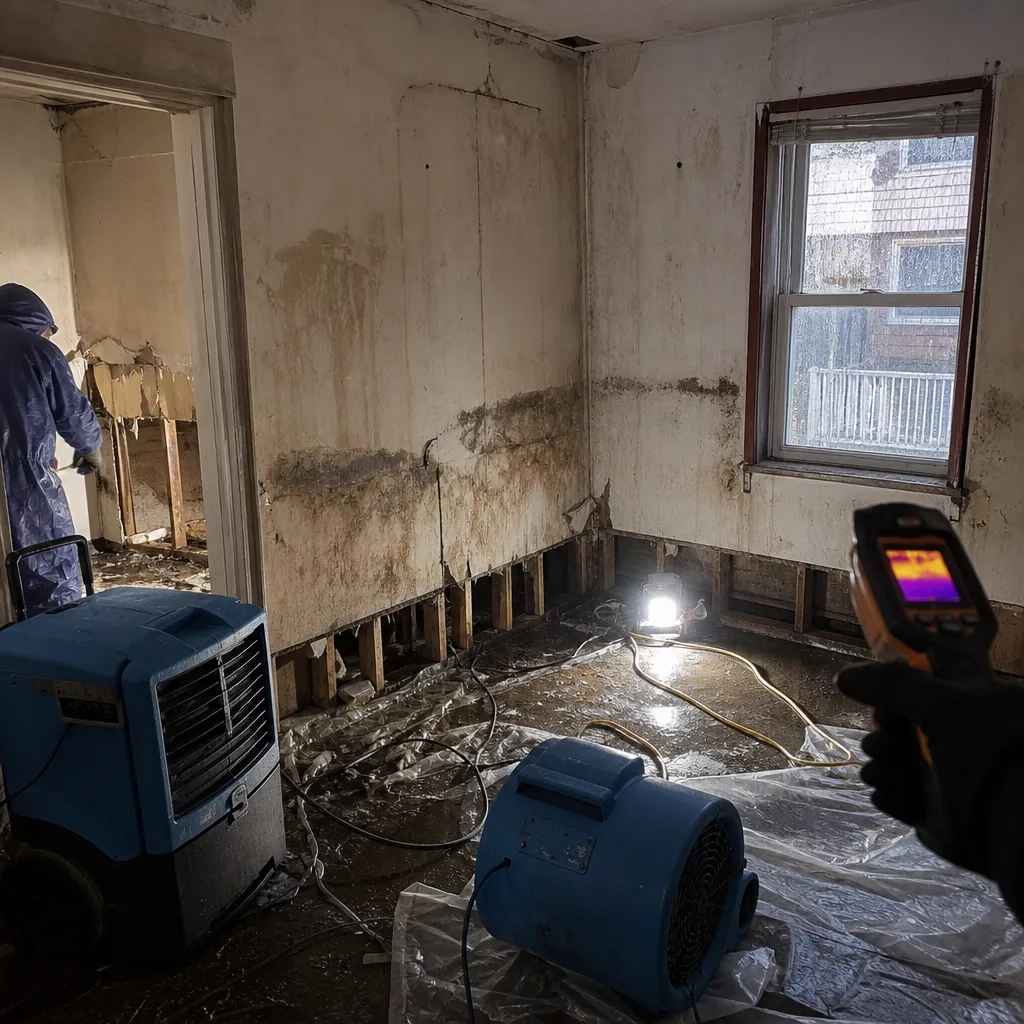 Before
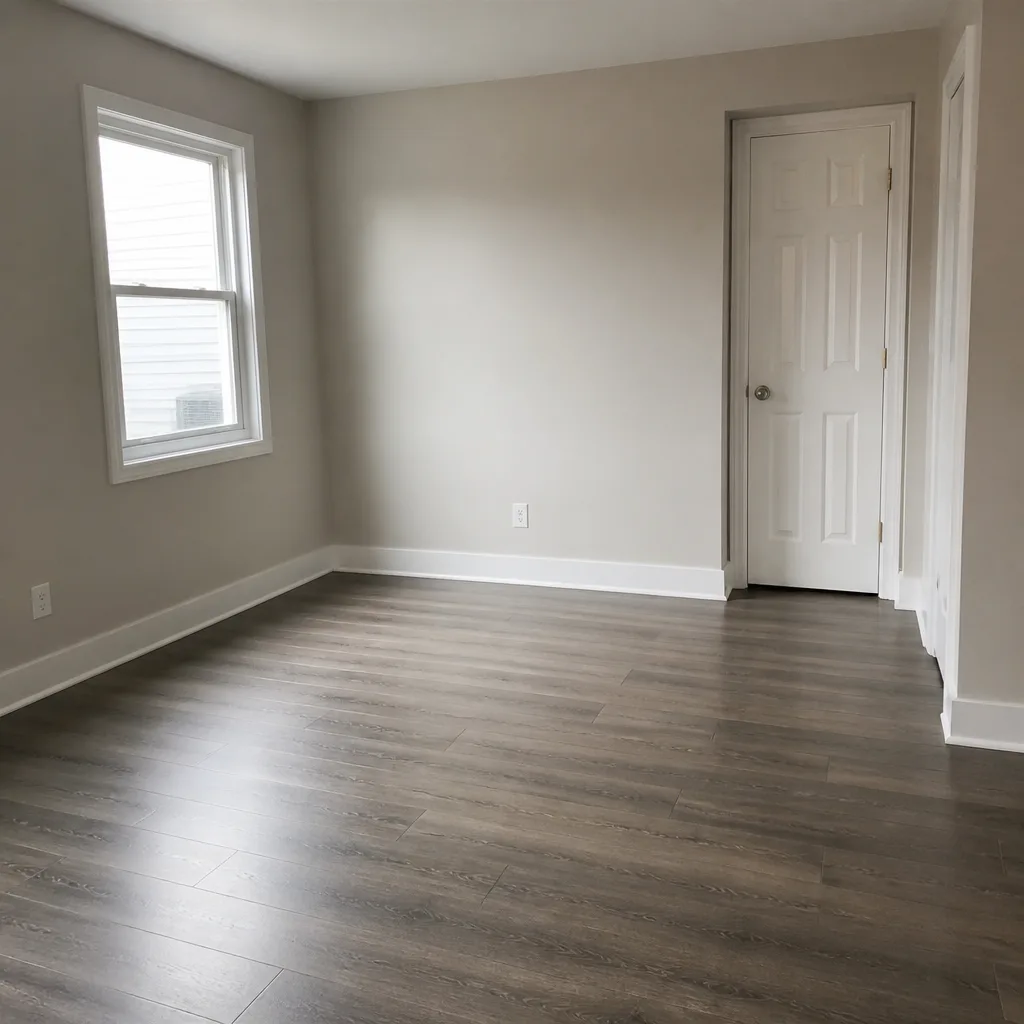 After
After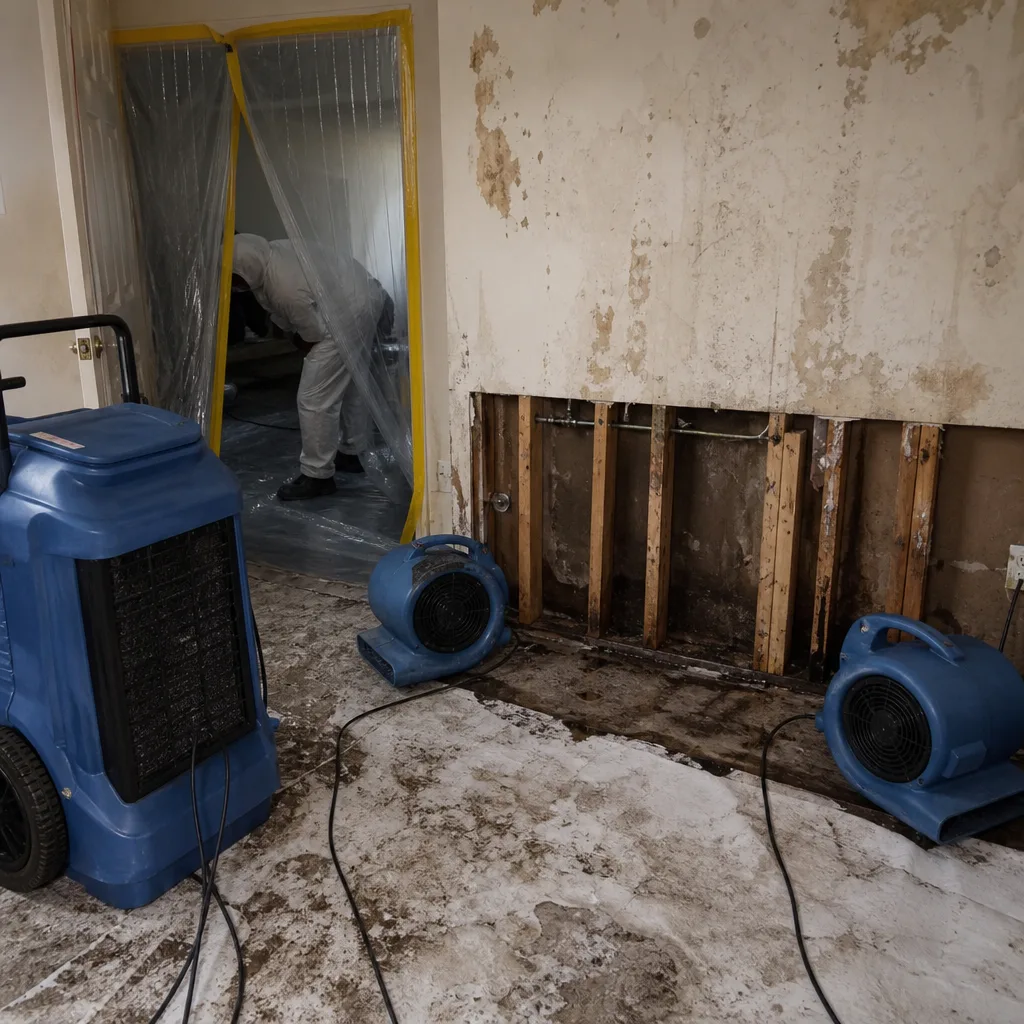 Before
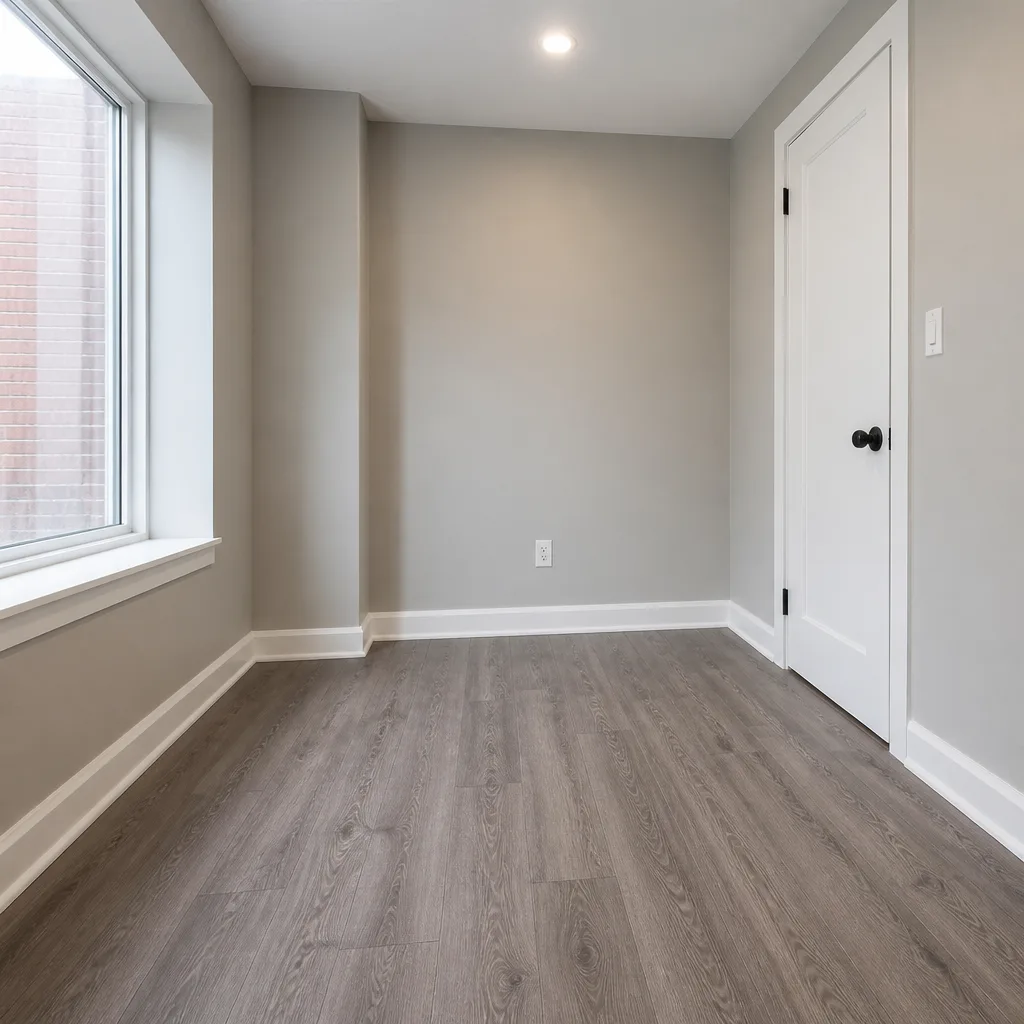 After
AfterFast, Reliable Mold Remediation Across Middle Village
Mold remediation in Middle Village, NY typically costs $1,800-$4,500 for a standard basement or crawl-space job, with full-service plaster-and-lath drying running higher due to the neighborhood’s shared-wall construction. We’re usually on site within 60-90 minutes of your call, and every job starts with a written price before anyone touches a tool. Call (516) 240-9735 - a live person answers, 24 hours a day, 7 days a week.
We’ve restored more than 12,000 homes since 2011, and a disproportionate share of our mold calls in Middle Village trace back to the same origin: a finished basement that took sewage backup water during a summer storm, got wet-vac’d by the homeowner, and smelled musty six weeks later. The plaster walls felt dry. They weren’t. This is the pattern we see on streets from Juniper Valley Road down to Metropolitan Avenue, and it’s why our Mold Remediation team documents moisture readings by the inch, not by guesswork.
Why DryMark Restoration Jamaica Is Middle Village’s Preferred Mold Remediation Company
Our reputation in Middle Village was built on documentation that survives an adjuster’s review. Alicia Brennan founded Back to Dry Restoration in 2011 after years as a claims adjuster watching homeowners lose coverage because the restoration company couldn’t produce drying logs, photo sequences, or a written scope signed before work began. We don’t repeat that mistake. Every Middle Village job gets a photo record on every visit, daily moisture logs formatted to IICRC standards, and a written price under Haven Standard, Clause 1.
Response time to Middle Village averages under 90 minutes from our New York City office dispatch. Crews are background-checked, uniformed, and licensed, with license numbers provided on request. We carry professional-grade drying systems from Injectidry, XPOWER, and B-Air, and we document every deployment to RIA and IFA standards. The result: restoration invoices that insurers pay without a fight, and a 365-Day Done Right Promise stamped on every job under The Haven Standard.
We also offer a Free Second Opinion on any competitor’s written estimate. Bring another company’s scope to us and we’ll review it at no charge. In Middle Village’s tight-knit blocks of attached brick two-families, word travels fast, and we’ve found that a second set of eyes on a mold protocol often catches missed containment or inadequate drying plans before the job starts.
Our Mold Remediation Services in Middle Village
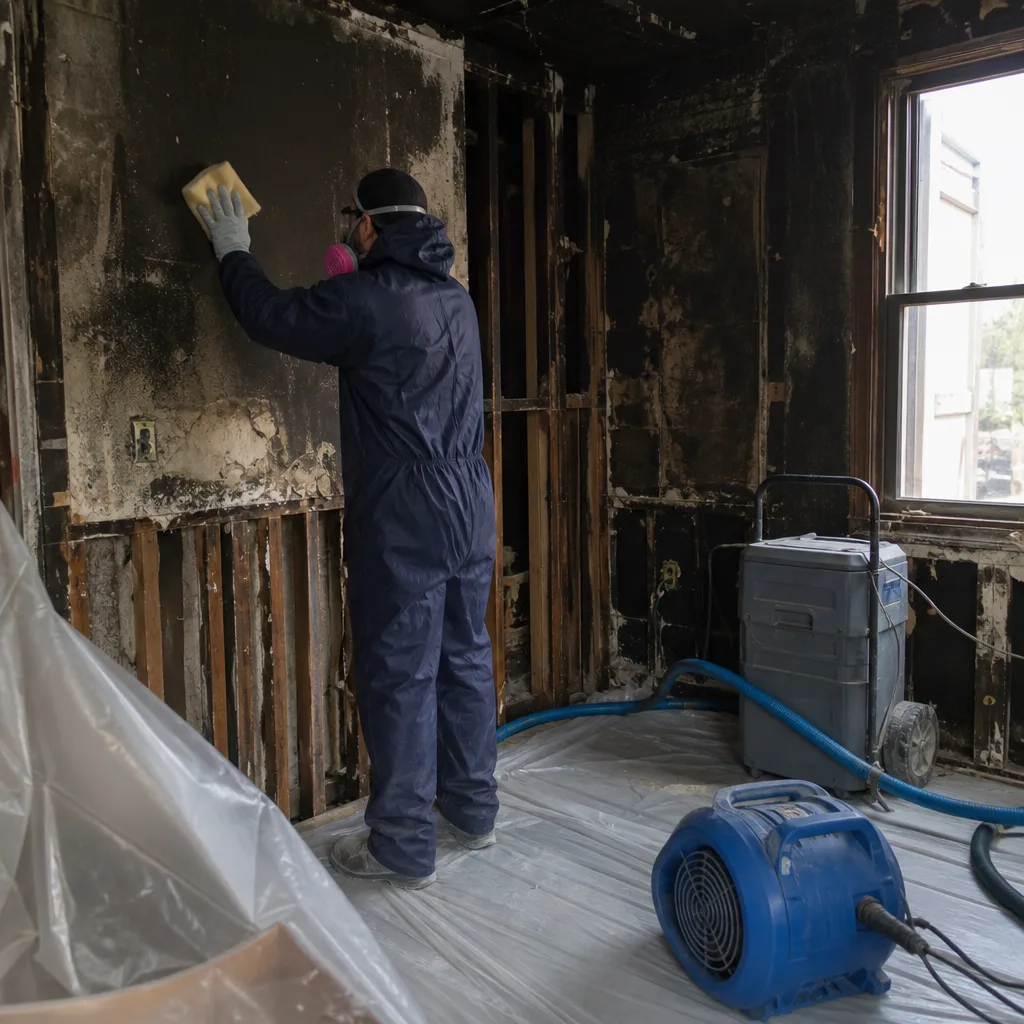
Mold Inspection & Testing
A proper mold inspection in Middle Village starts with understanding what you’re actually looking at. We don’t wave a flashlight and declare a basement “fine.” Our techs run moisture mapping on plaster-and-lath walls, take psychrometric readings (temperature, relative humidity, and vapor pressure differential - the force that drives moisture through materials), and collect air and surface samples for independent lab analysis. In Middle Village’s 1920s-1950s housing stock, we regularly find mold colonization at 18-24 inches up a plaster wall, exactly where Category 3 water wicked behind the hard coat and sat on the lath. You can’t see it. We measure it.
Mold Removal
Mold removal in Middle Village requires containment protocols that account for shared wall chases and party-wall construction. A single row of attached brick two-families on 69th Street or 79th Street can share ductwork, plumbing voids, and framing gaps that let spores migrate between units. We build sealed containment with negative air pressure before any removal begins, then HEPA-vacuum and treat affected surfaces with antimicrobial agents rated for Category 3 contamination. Every step is photo-documented. Every bag of debris is logged. The written scope you signed before we started is the scope we complete.
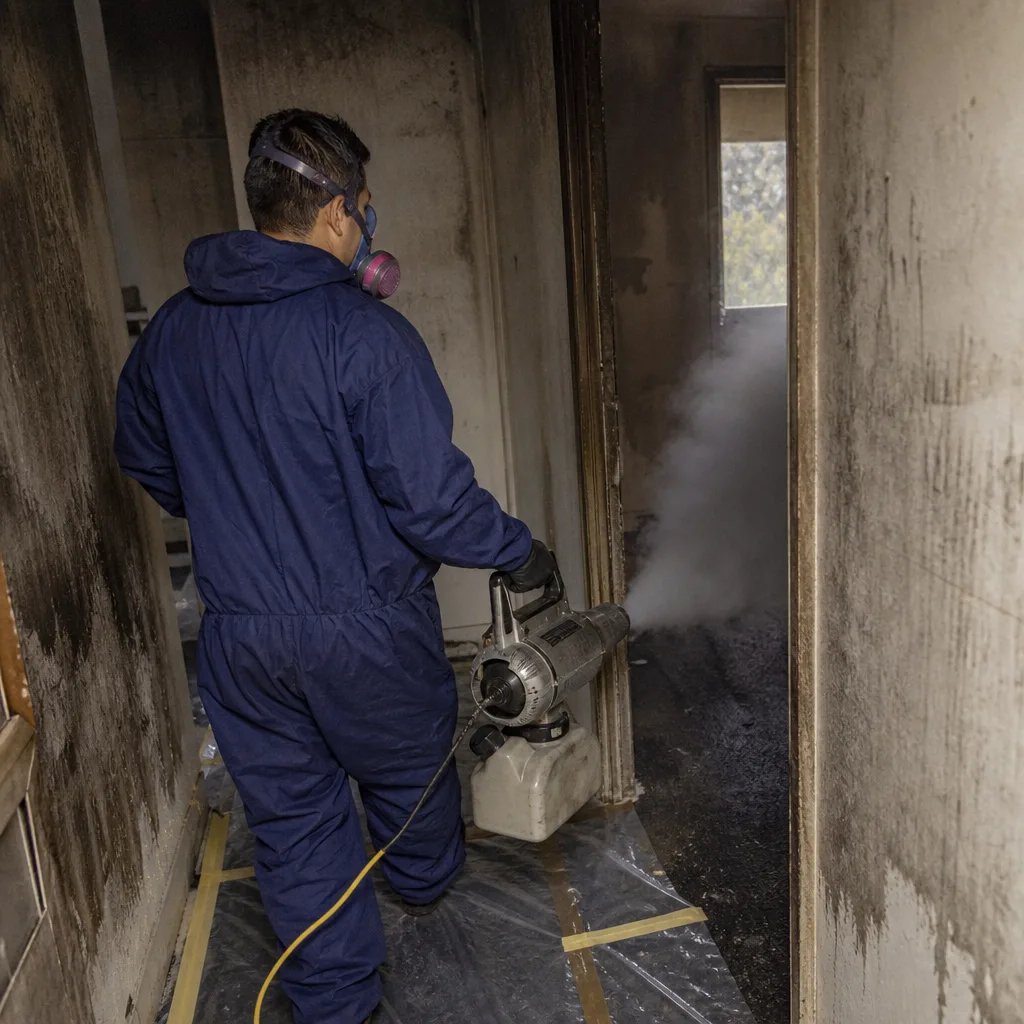
Black Mold Remediation
Stachybotrys chartarum - the mold species most homeowners call “black mold” - requires the same containment and documentation as any toxigenic mold, with one added consideration in Middle Village: it grows on cellulose materials that have stayed wet for extended periods. Original plaster walls don’t feed mold directly, but the lath behind them does. The paper facing on old insulation in finished basements does. The cardboard backing on paneling from a 1980s renovation definitely does. We identify the food source, remove it, and dry the structure to IICRC S520 standards before any rebuild begins.
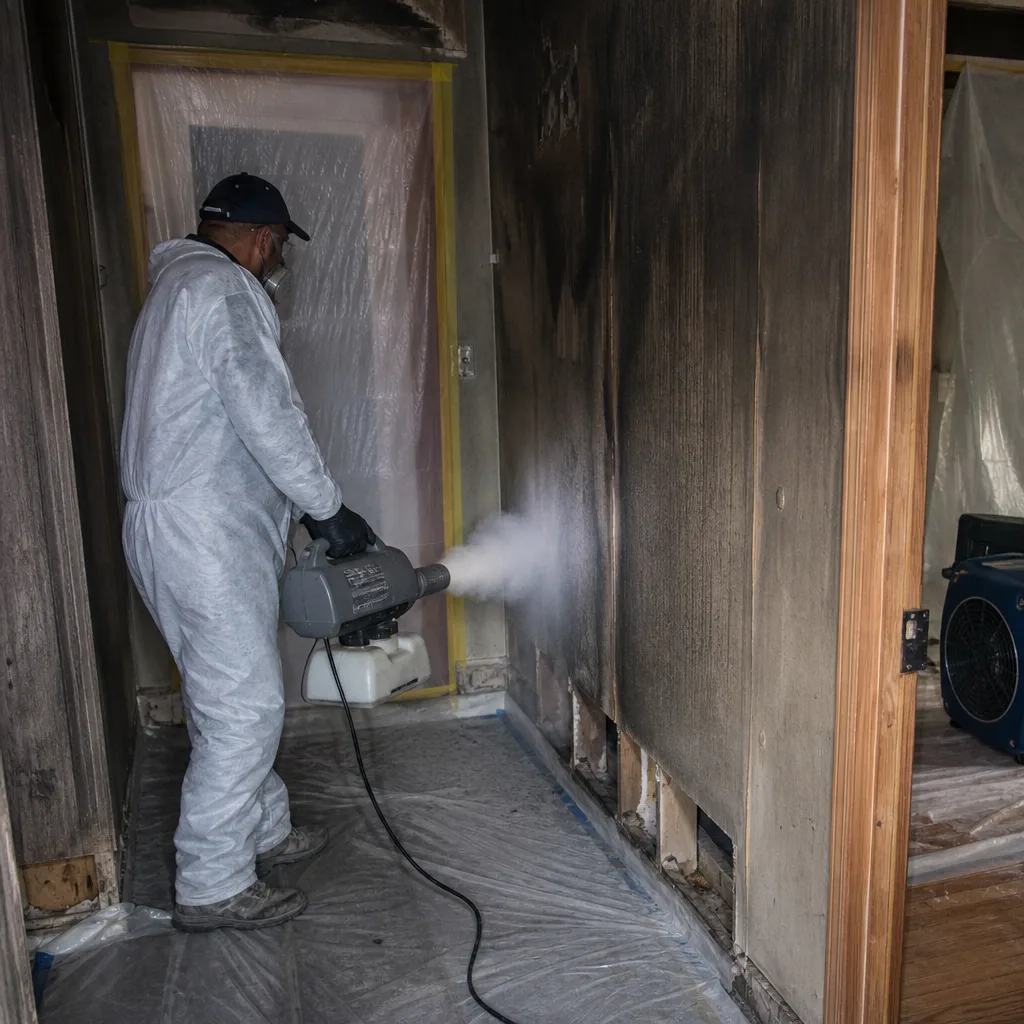
Air Quality Restoration
After mold removal in a Middle Village attached home, air quality restoration isn’t optional. Spores that escaped containment during the initial event, or that migrated through a shared party wall before we arrived, can resettle and colonize new areas. We run post-remediation air sampling with independent lab verification, then deploy HEPA air scrubbers and adjust building pressurization to prevent cross-contamination. Our goal isn’t just “no visible mold.” It’s documented air quality that meets or exceeds background levels for the neighborhood.
Moisture & Humidity Control
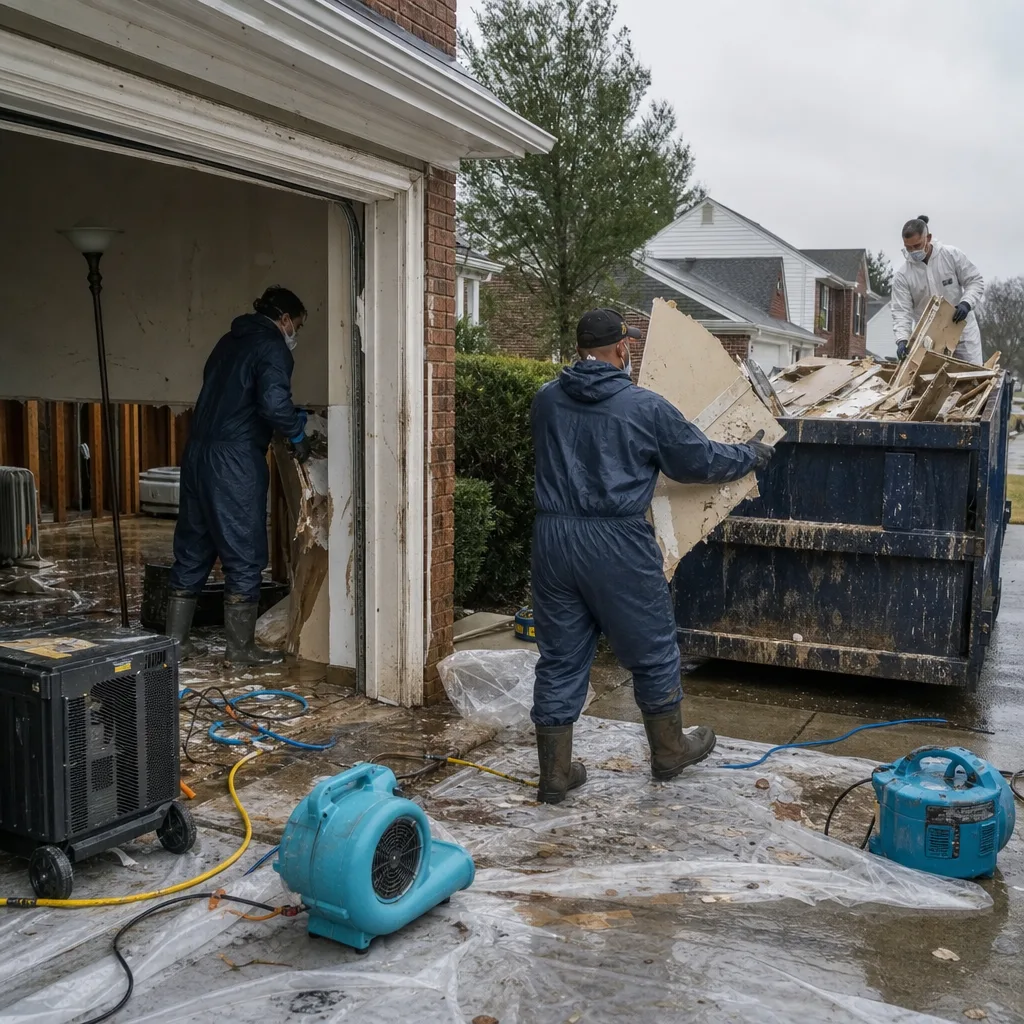
Moisture control in Middle Village’s finished basements means controlling the humidity that original plaster walls release for weeks after a flood event. We don’t set a dehumidifier and call it done. Our techs calculate the specific humidity load of the space, size equipment to the cubic footage and air changes per hour, and monitor with daily psychrometric logs until the structure reads dry by IICRC standards - not by touch, not by smell, by measured equilibrium moisture content. This is the difference between a one-time remediation and a callback six months later.
Crawl Space Treatment
Crawl spaces in Middle Village’s older brick two-families are less common than full basements, but where they exist - often under rear additions or enclosed porches - they present unique mold risk. Dirt floors, limited ventilation, and shared foundation walls with neighboring units create microclimates where relative humidity stays above 70% year-round. We install vapor barriers, seal foundation vents where appropriate, and treat structural framing with borate-based preventatives that inhibit future mold growth without creating an indoor air quality concern.
What happens when you call
- 1
A real person answersNo phone trees - you reach a local pro.
- 2
You get an upfront price rangeHonest numbers before anyone is dispatched.
- 3
A background-checked tech heads outLicensed & insured, dispatched right away.
- 4
You approve before work beginsNothing starts until you say go.
BeforeAfterTrusted Brands We Service in Middle Village
Our equipment fleet for Middle Village mold jobs includes Injectidry systems for in-wall drying behind plaster-and-lath without demolition, XPOWER and B-Air air movers and dehumidifiers sized to the specific humidity load of finished basements, and HEPA-negative air machines from Phoenix that maintain containment during removal. We stock replacement hoses, filters, and drying mats locally so there’s no delay when a July downpour hits multiple homes on the same block. Every piece of equipment is logged by serial number on your job documentation, and every reading it produces becomes part of the drying record we submit to your adjuster.
Common Mold Remediation Problems We See in Middle Village Homes
- Homeowners treat sewer backup as a wet-vac job. Category 3 water in original plaster requires full contamination protocols and slow structural drying. By the time the musty smell appears in a Middle Village finished basement, mold has already colonized the lath behind the hard coat. We see this on streets off Eliot Avenue every summer after heavy rain overwhelms the combined sewer.
- Contractors skip moisture mapping of shared party walls. An air mover and dehumidifier pointed at the visible wet wall doesn’t touch the moisture that crossed through masonry chases into the attached neighbor’s unit. We’ve responded to second, delayed insurance claims where the original contractor never checked the other side of the wall.
- Cut-and-replace approaches fail on plaster. The hard coat hides moisture for weeks. A contractor who cuts out visible moldy plaster like drywall leaves wet lath and framing behind, guaranteeing rebound mold. Our Injectidry systems dry behind the plaster intact, preserving original crown moldings and decorative details that can’t be replicated.
- Humidity from oil boiler rooms feeds hidden mold. Middle Village’s aging oil-fired boilers generate significant moisture during combustion, and many are located in basement utility rooms adjacent to finished living space. Without proper exhaust and humidity control, this chronic moisture source creates ideal conditions for mold behind paneling and in ceiling cavities.
Pricing for Mold Remediation in Middle Village, NY
Mold inspection and testing in Middle Village runs $350-$650, including moisture mapping, psychrometric readings, and air/surface samples for lab analysis. Contained mold removal in a typical finished basement starts around $1,800 and ranges to $4,500 depending on affected square footage, material type (plaster-and-lath requires more labor than drywall), and whether the job extends into a shared party wall. Full-service plaster drying with Injectidry in-wall systems, antimicrobial treatment, and post-remediation air quality verification typically falls in the $3,200-$5,800 range for Middle Village’s average two-family basement.
What drives cost: the extent of hidden moisture behind plaster, whether Category 3 contamination protocols apply, and whether neighboring units require testing or treatment. We deliver a written price before any work begins, every time, with no scope-creep additions once the crew is inside. Haven Standard, Clause 1. Bring a competitor’s written estimate and we’ll review it free - our Second Opinion service.
| Service | Typical Range in Middle Village |
|---|---|
| Mold Inspection & Testing | $350 - $650 |
| Contained Mold Removal (drywall) | $1,800 - $3,200 |
| Plaster-and-Lath Mold Remediation with In-Wall Drying | $3,200 - $5,800 |
| Post-Remediation Air Quality Verification | $280 - $450 |
| Neighbor Unit Testing (shared wall) | $200 - $400 |
We Also Serve Cities Near Middle Village
Our crews respond throughout central Queens, including Middle Village, Rego Park, Elmhurst, Forest Hills, and Jackson Heights. Dispatch and scheduling are coordinated from our New York City office; crews serve Middle Village locally with the same 60-90 minute target response. The shared-wall construction, combined sewer vulnerability, and original plaster-and-lath housing stock that define Middle Village’s mold risk extend into adjacent neighborhoods, and we apply the same documentation protocols and drying standards across the entire service area.
Serving Middle Village, NY - Our Local Coverage Area
We’re based in the Middle Village area and know this community well. Use the map below to see our service coverage - if you’re nearby, we can almost certainly help.
FAQs - Mold Remediation in Middle Village
Mold can begin colonizing within 24-48 hours of water intrusion, but in Middle Village’s plaster-and-lath basements, visible growth often takes 2-4 weeks because the hard coat slows surface manifestation while moisture festers on the lath behind. By the time you smell mustiness, the colony is established. Call (516) 240-9735 for same-day moisture mapping - estimates are free.
Attached brick two-families in Middle Village share masonry party walls with continuous wall chases, framing gaps, and sometimes ductwork that allow moisture and spores to cross property lines. A single Category 3 backup routinely becomes a two-household claim. We test and document both sides of every shared wall before declaring a job complete. Call (516) 240-9735 and we’ll coordinate access with your neighbor if needed.
Yes. Our Injectidry systems create controlled airflow behind plaster-and-lath through small access points, drying the wall cavity without destroying original hard coat or decorative moldings. This preserves irreplaceable 1920s-1950s details and produces documented moisture logs that prove the structure is dry to IICRC standards. Not every contractor in Middle Village owns this equipment or knows how to use it on historic plaster. Call (516) 240-9735 for a written scope that specifies the method.
Category 3 water is grossly contaminated, carrying pathogens from sewage, street runoff, and the combined sewer system. In Middle Village, this is the standard classification for summer storm backups through floor drains and sewer laterals. It requires full PPE for workers, sealed containment, antimicrobial treatment of all affected materials, and specialized drying protocols - not a wet-vac and a fan. Call (516) 240-9735 for documentation that satisfies your insurer’s contamination requirements.
Yes. Post-remediation air sampling is standard on every job, with independent lab analysis comparing indoor spore counts to outdoor background levels for the Middle Village area. We don’t declare a job finished until the numbers confirm it. The lab report becomes part of your permanent documentation package. Call (516) 240-9735 to schedule remediation with verified air quality clearance included.
Written by Alicia Brennan, Owner at DryMark Restoration Jamaica, serving Middle Village since 2011 under The Haven Standard.